From the Archive: A Conversation Between Adolph Gottlieb and Jack Breckenridge


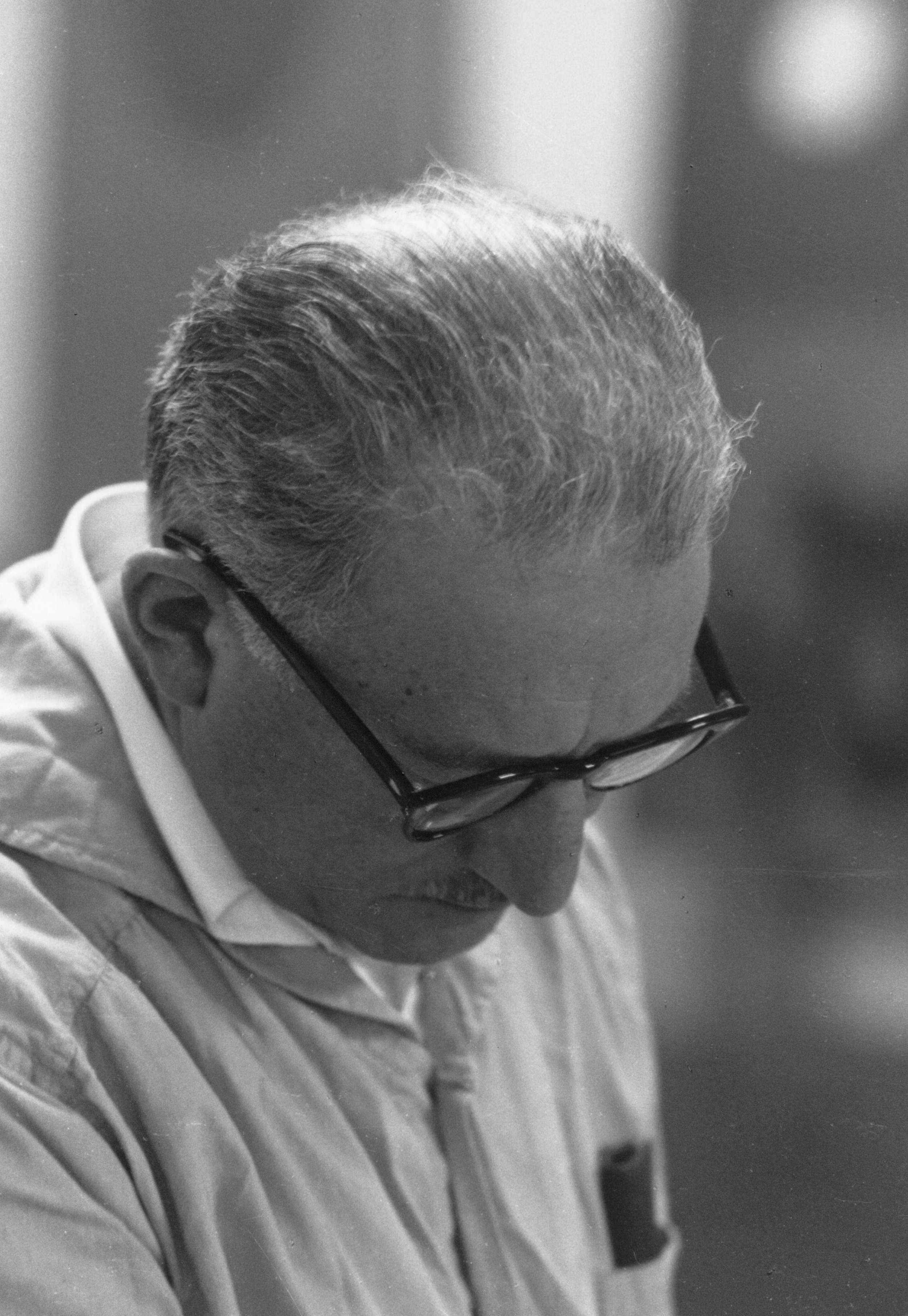
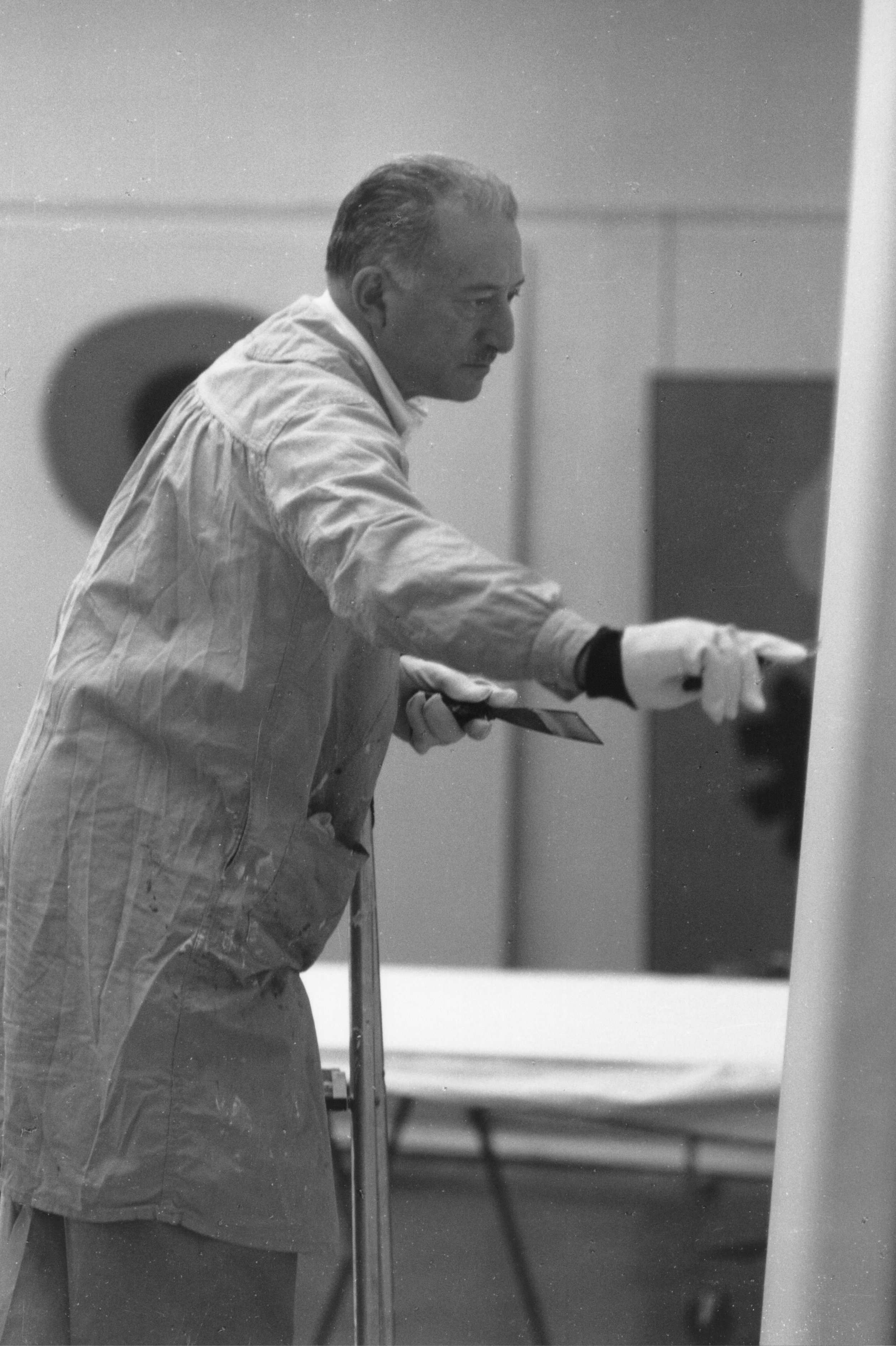
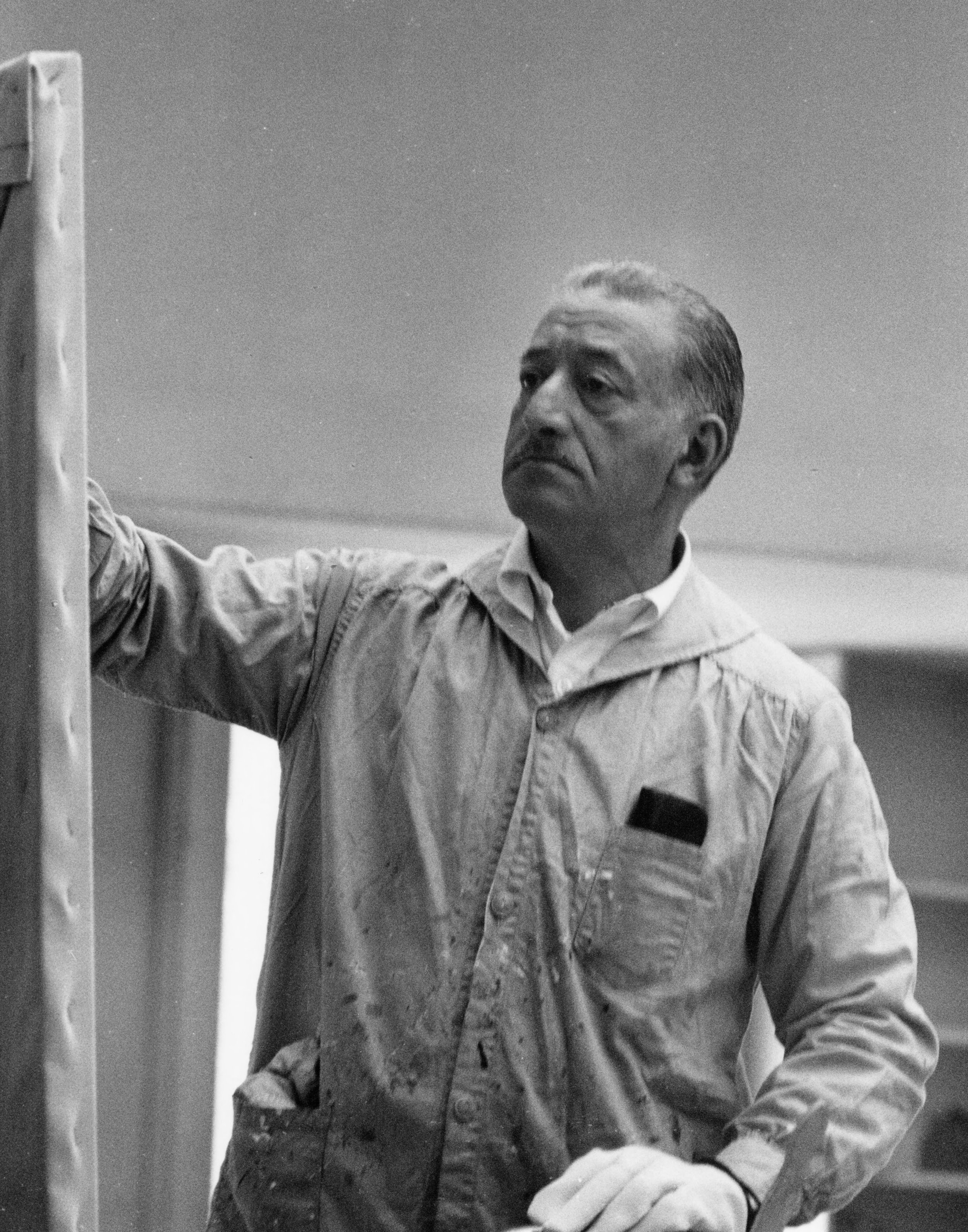
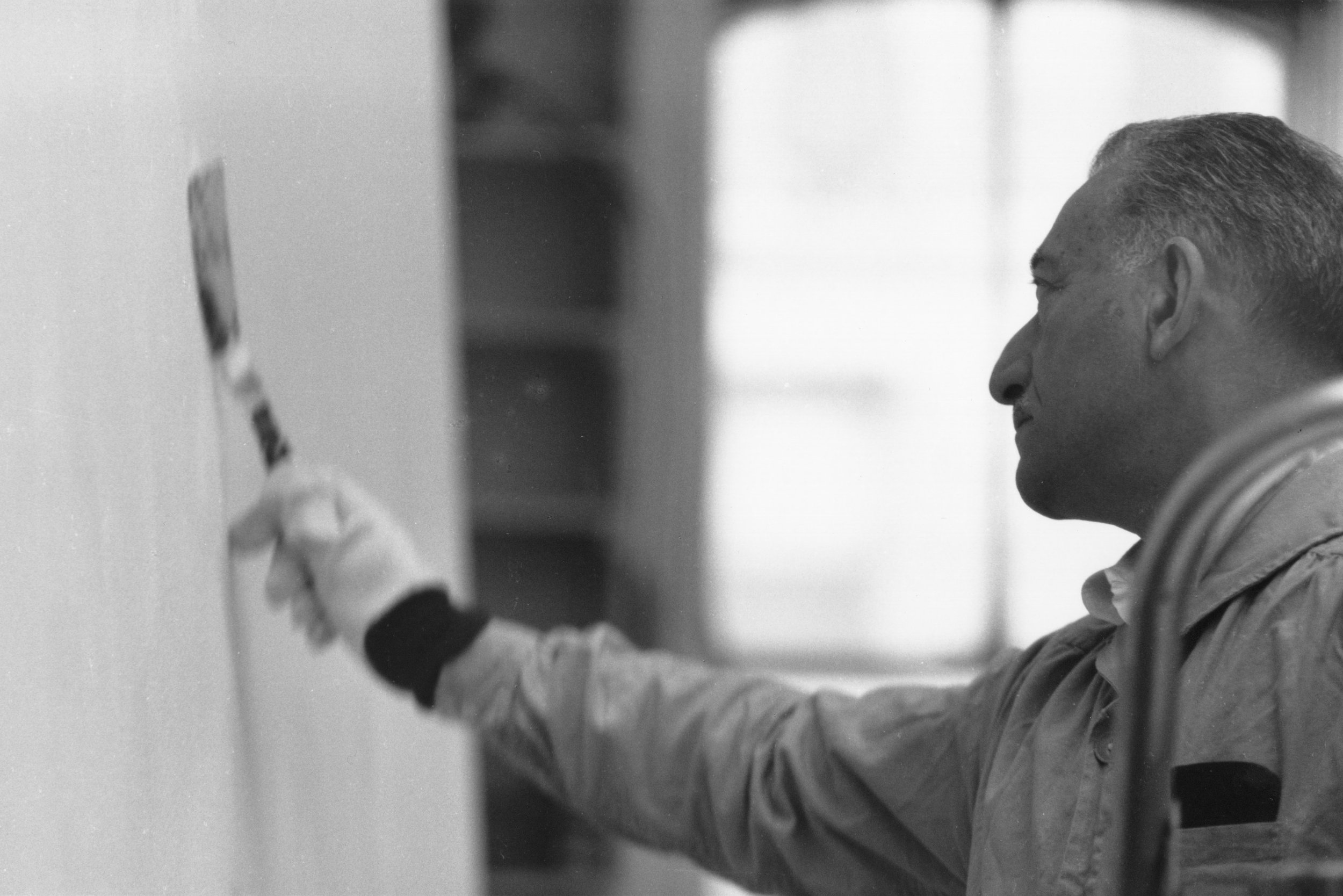
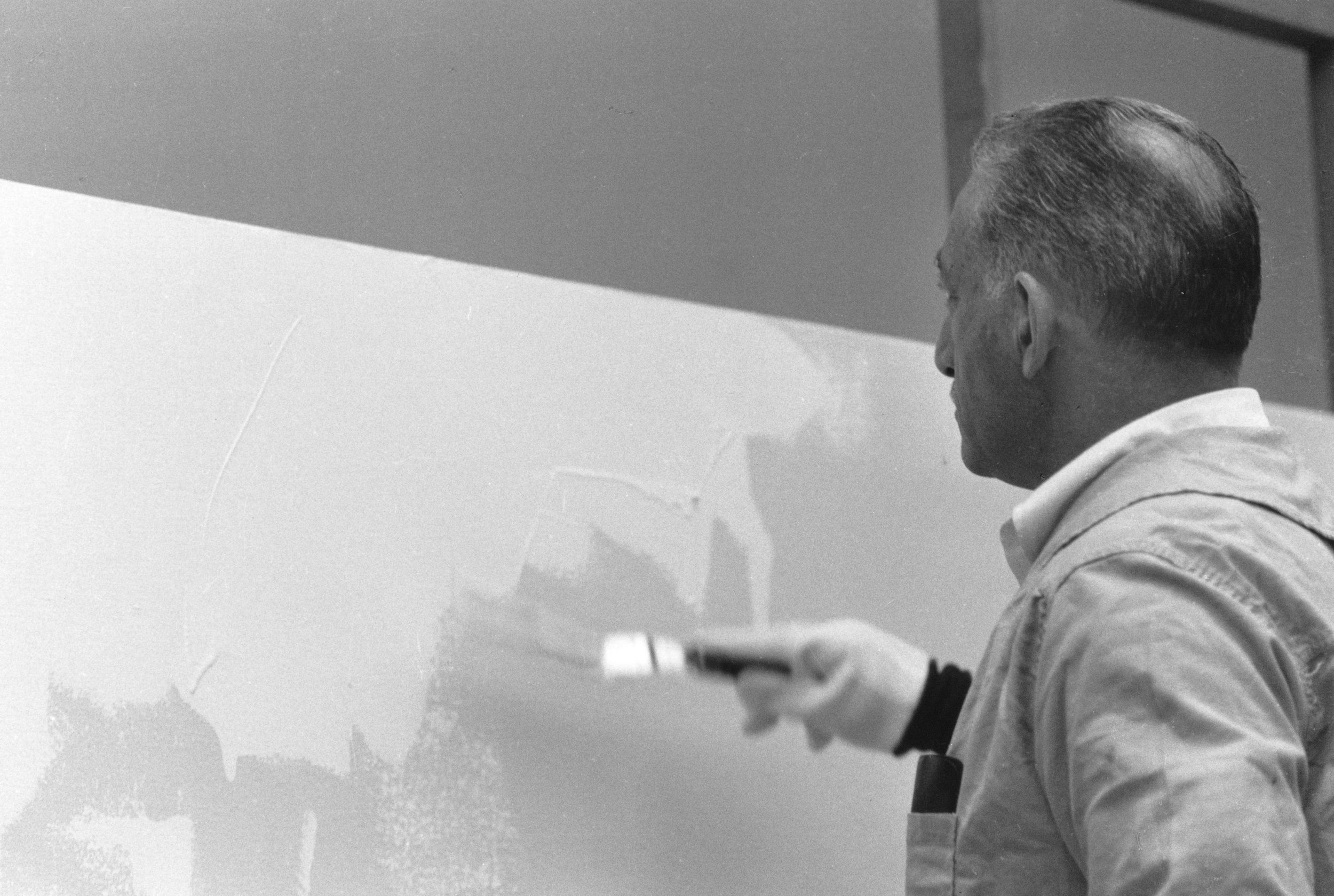
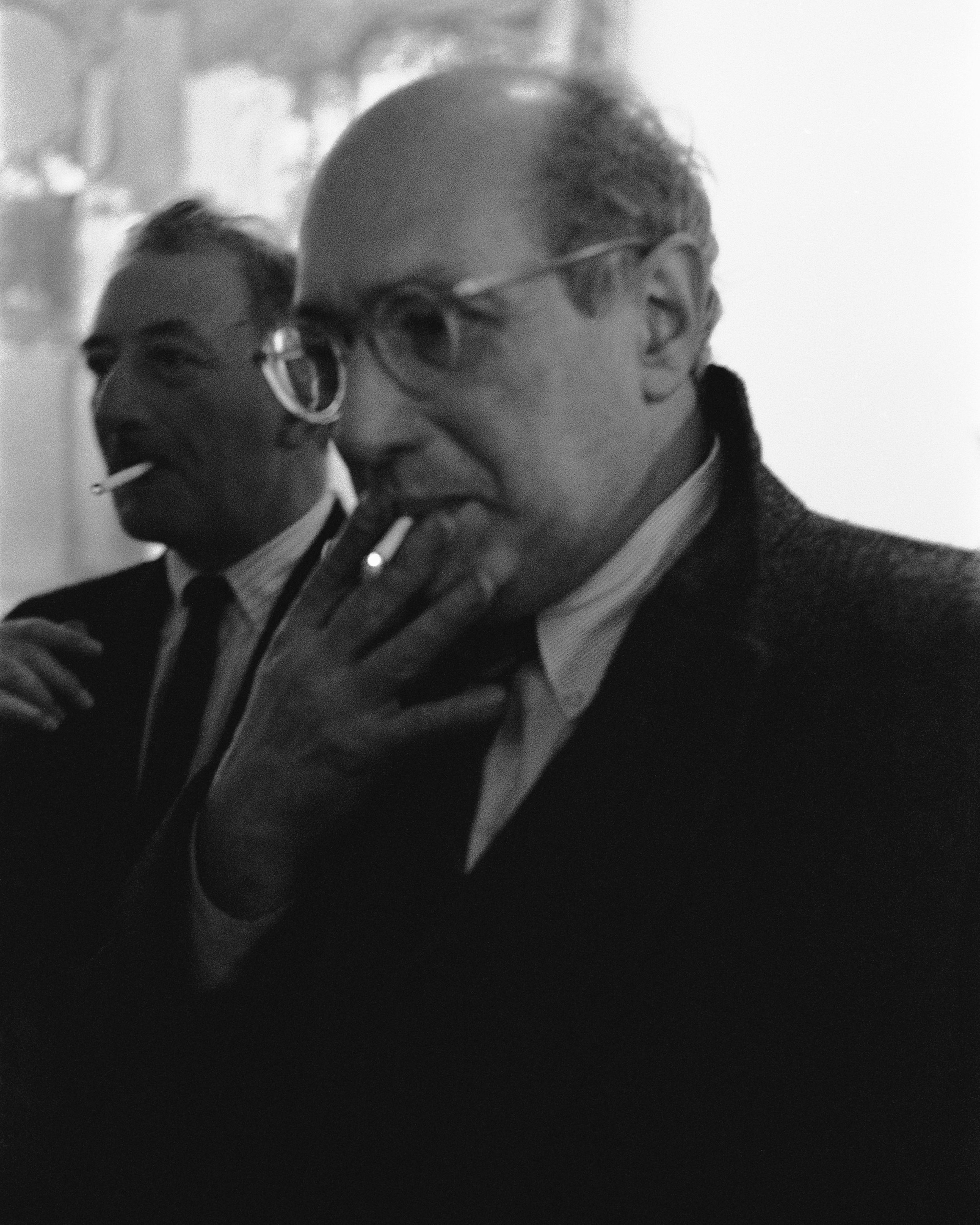
Shown: Adolph Gottlieb at 380 W. Broadway, January 7, 1973. Photographer: Budd Studio


In the Spring of 1973, Adolph Gottlieb was invited to speak to art students at the University of Arizona by Jack Breckenridge. The general topic of the event considered "The Shift of the Art Capital From Paris to New York in the 1940s.” The presentation began with a slideshow of Gottlieb's work which the artist asked not to be narrated. After the slides concluded, a question-and-answer segment followed.

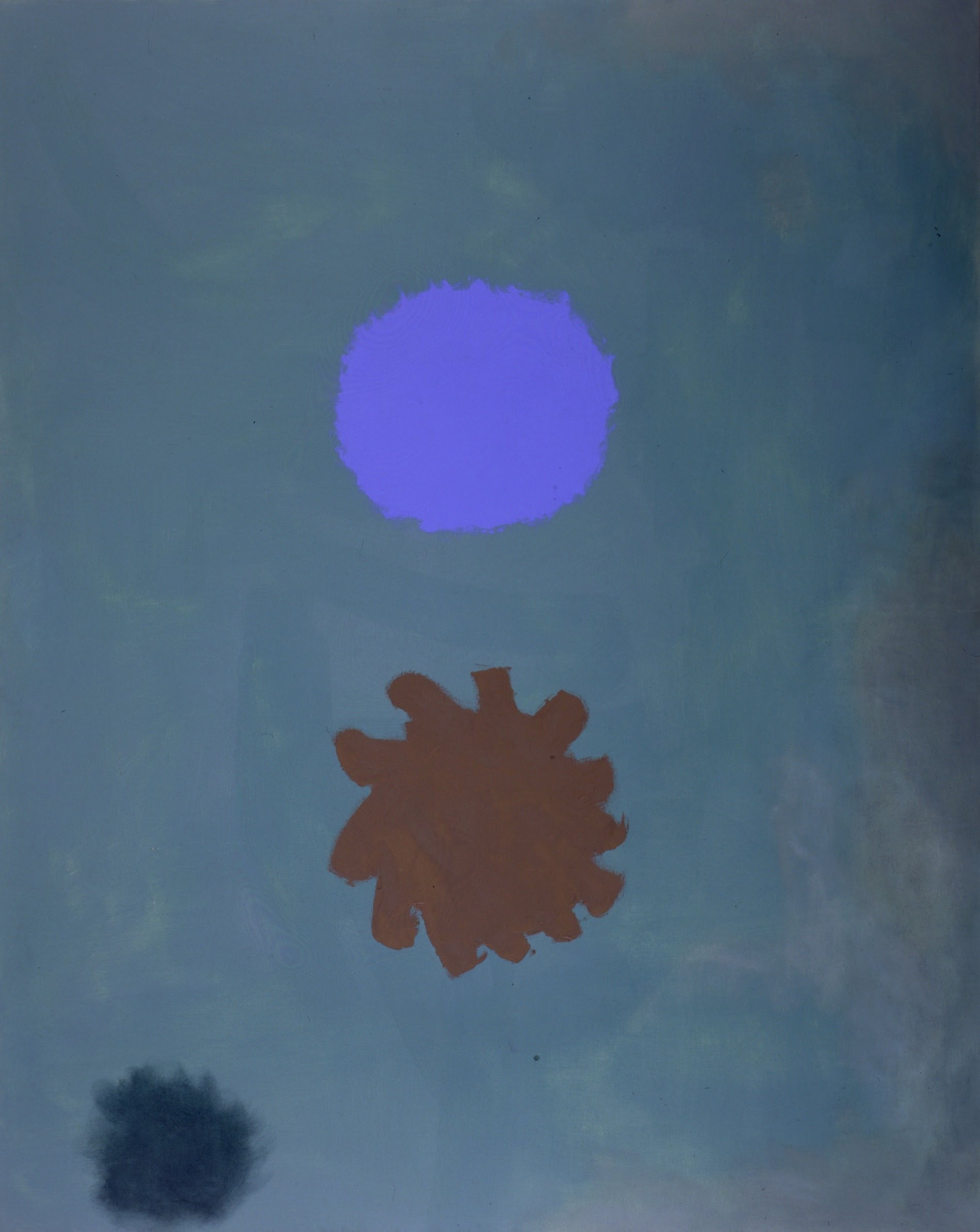
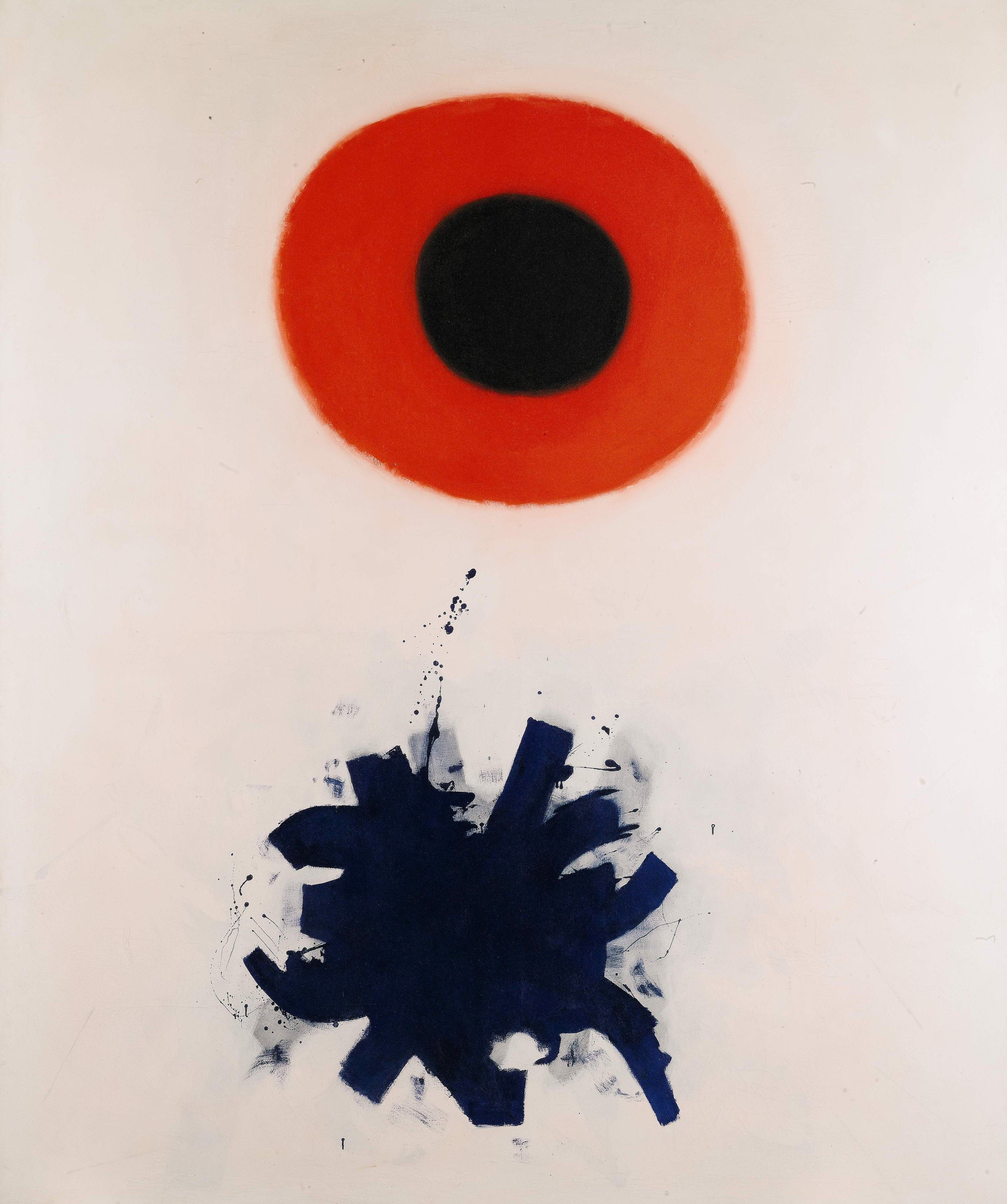
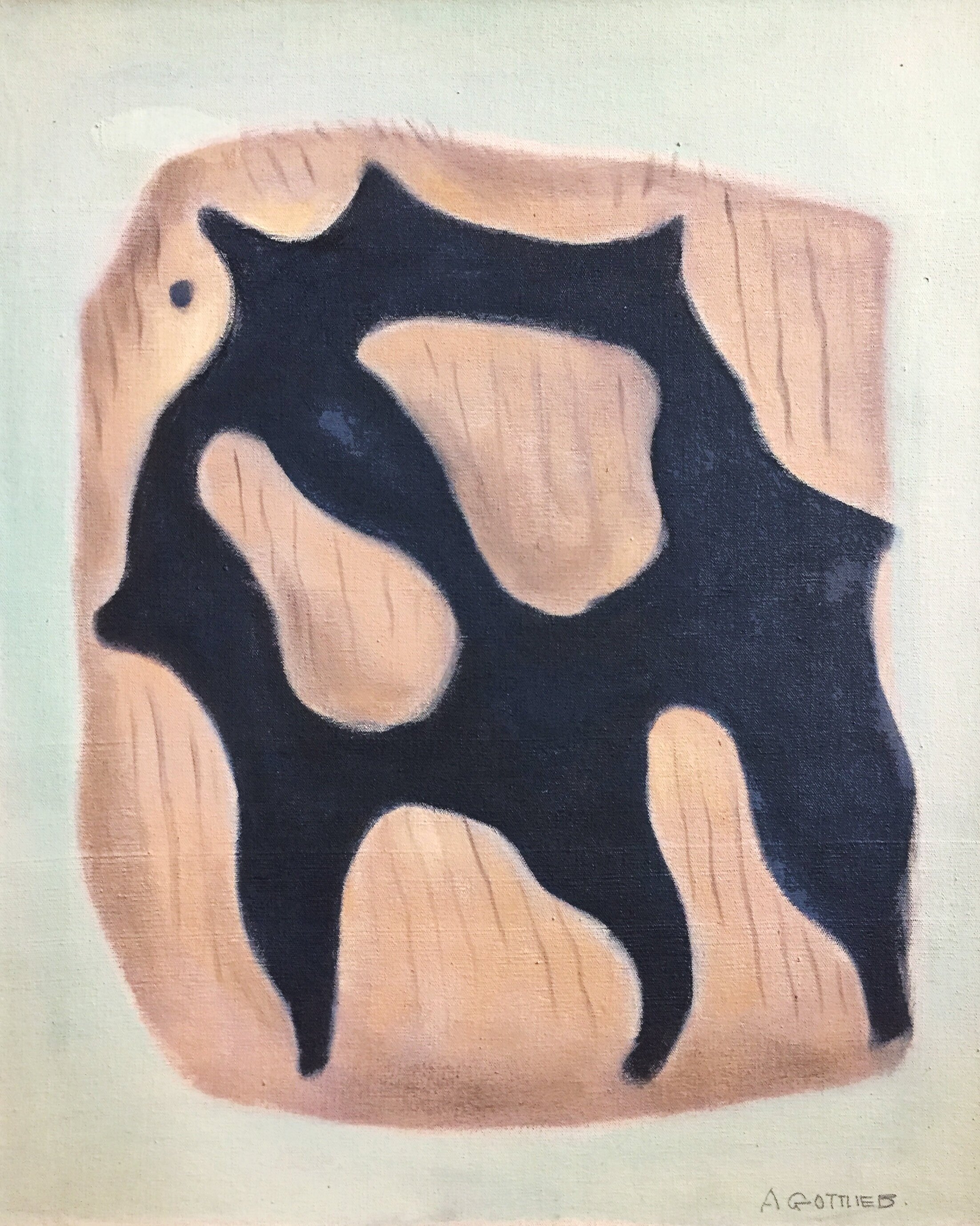
In 1978, the transcript of the interview was published by Jack Breckenridge in Phoebus 2: A Journal of Art History along with two illustrations of Adolph Gottlieb's artwork (Recurrent Apparition from 1946 and Burma Red a work Gottlieb painted in Phoenix from 1973). These paintings were chosen to represent Gottlieb's "general observation
about a change that took place in his work in the early 1950s" in the published interview.

In 2003, the Gottlieb Foundation was fortunate enough to interview Jack Breckenridge by phone where he recalled Gottlieb as "entirely likable and quick-witted" Despite Gottlieb's physical limitations, due to a stroke that the artist suffered a couple of years prior, leaving him confined to a wheelchair and his left side paralyzed, Breckenridge recalled him as energized by the students and after the 2-hour event was still able to judge a student art show. As Breckenridge recalls in Phoebus "his mind was very quick and his sallies in answer to questions often brought forth quick laughter and applause from the nearly three hundred people in the audience."

The interview's transcript is reproduced in its entirety below along with other archival documents referenced in or surrounding the interview.


Adolph Gottlieb (AG): There is something I would like to get across to you – it has to do with the different atmosphere and when I was young – as you may know, during the Forties most of us in New York were doing all-over painting. There was something in the air that made us do that. I don’t know how to explain it, but we felt that was the way painting was going. It was all-over, there was no beginning and no end. I decided that I was tired of the paintings which were endless: which were all-over paintings. I decided that I would try to make paintings which had a focal point very much the way a portrait had. All of the paintings that were done after the Forties have that characteristic and I still retain that. As you can see there is a very defined focal point.
            I must say that I am not prepared to make a lecture in the usual sense that we are accustomed to. I don’t have the pedagogical approach. I think it is my prerogative as an old man to reminisce and go back to early days. I’ll have a lot of loose ends which I hope will tie together. I think that you will find that they will tie together. I’ll just go back to when I went to Europe for the first time in 1921. I worked my way over on the ship and had a lot of adventures which are another story. I eventually got to Paris and I did very little painting. I was going to the Grand Chaumiere to a sketch class where I did sketches from life. While the instructor was supposed to be Lucien Simon, I never saw Mr. Simon. I just went and worked on my own. And I did something that was more useful, I went to the Louvre almost every day. I certainly went there every other day. I knew the Louvre very well. I could go in there and find my way to any painting that I was interested in seeing. I think this was the best experience that I could possibly have had because I think that the real university for any young artist is the museum which has a rich collection. I think it is much better to study with Poussin than study with Gottlieb. So you see in a sense I am very modest. At any rate, what I wanted to say was that those days were the days of the expatriates like Hemingway and others and it was considered to be very important to go to Europe for an America artist. American art at that point was – well, it was very much behind – about twenty-five years behind European art. The European Impressionists were about twenty-five years ahead of the American Impressionists. In fact, at that time American artists were waiting for the latest copy of Cahiers d’Art to see what was happening in Europe and that gave them a cue as to how to proceed. So I went to Europe and the best thing was the museum.

Jack Brekenridge (JB): What would you say to the young student who wishes to train himself today?
AG: Today I would say that he should go to New York and haunt the Metropolitan and other museums.
JB: And not worry about the Art Students’ League?
AG: No, I don’t think the Art Students’ League would do him much good.
JB: You talked to me the other day about the importance of the shift of the art capital from Paris to New York.
AG: Well, I am very interested in that. I’ll explain it to you. When I went to Paris and I lived in Europe for awhile I became a Francophile. There are many great French artists whom I admired so much that they impressed me for my whole life – older artists like Ingres, Delacroix, and Courbet. When I came back to New York I found there was a very deeply ingrained provincialism in the United States which seemed to stem from the Midwest and with it came a great deal of Midwestern painting that I thought was very bad. I’m talking about Benton, Grant Wood, John Steuart Curry. I think that, in a way, they created a vacuum into which the next generation could step.
JB: By being so bad?
AG: That’s right – and I think that I should tell you that in the Forties there was a lot of talk among New York artists as to whether New York was going to be the art capital of the world. As a personal reminiscence my wife and I used to go to Provincetown in the summers in those days and in the summer of 1949 between my wife and myself and a friend of ours named Weldon Kees, who was a very sensitive poet and painter, and Fritz Bultman, who was painter and sculptor, we started something called Forum Forty-Nine. In the course of the summer we had a number of interesting exhibits and forums. The forums and exhibits took place in an old, no-longer-used post office that we got the use of.  Each of us took turns in organizing something and my turn came up, so I organized a forum called “French Art versus American Art”. This created quite a bit of dissension. We didn’t have any exhibit of French art, we had a discussion. We did show the American artists who were in Provincetown at the time. We invited a number of distinguished people to this forum, among them were Stuart Preston of the New York Times and Fred Wight, who now, I think, heads the art department at UCLA. Before the forum started there were a group of dissidents including Hans Hofmann and Fritz Bultman who wanted to hand out a mimeographed flyer to people who were coming in. So we said to them, “Don’t hand it out, we’ll give it to everyone who buys a ticket.” The flyer read something to the effect that “…we are objecting to this program because we consider Paris the city of light and culture and light and culture have emanated from it for the past hundred years or more, so we are in disagreement with this topic.” We then handed it out to everybody. After the forum there was a party at someone’s house. While we were at the party, I went over to Hofmann. I said, “Hans what did you really object to about this forum? Now that you’ve heard it don’t you think that it was all right?  It was an interesting discussion.” He said, “Well, I’ll tell you Adolph, you should have French art first.” I asked, “Why?” He replied, “Because French art is better than American art.” So I said, “We did say ‘French Art versus American’.” He said, “Well, then it’s all right.”
JB: Then, there was evidence in your mind, by 1949 that…
AG: Oh, by 1949 we were afraid that we were being too chauvinistic about American art. So the question came up, were we right in being too chauvinistic? I took the position that we were entitled to it because as I saw it – well, I’ll give you an example of what I mean. I was in the Kootz Gallery one time and I was in this back private viewing room. This was in the middle Forties or late Forties. Kootz had just been to Paris and had brought back one of the latest paintings of a young Parisian painter. To show it to this collector, he put it on a chair. Then the collector, to look at it more closely got down and looked at it very closely, in fact, his knee touched the floor and I thought it was very symbolic – down on his knees before a French painting, because it was French. He would never had done that for a new American painting. At that point I decided that chauvinism was good for us.
JB: What do you think that this had meant to younger artists?
AG: I think that it has given great freedom. As an example of what I mean, I was on a broadcast with a British critic – the broadcast was supposed to be for the BBC – and I made a point about this. I was discussing this business about American art in relation to European art and the ways it had been subservient to it. I said that France was like a colonial power in art and that we were the colonists; and that in the 1940s American artists took the tea and dumped it overboard and had their Declaration of Independence. I was curious to see how this would go over with the British. I later saw a transcript and they cut that out. I think the situation got reversed and America became the colonial power artistically. The Japanese and many others, including the French, became our subjects.
JB: Let’s talk about the WPA. You worked for a time for the WPA?
AG: I did, yes. I think it was $23.50 a week.
JB: A lot of people have said that this was a kind of apprenticeship for young artists of that time.
AG: I think the value of the WPA is vastly exaggerated.
JB: What do you think, then, of government support of the arts?
AG: I think it is very dangerous. It has a tendency to try to influence the artist. Just like dealers try to influence artists.
JB: Have they tried to influence you?
AG: Yes. Oh sure. Either to maintain a style or to get certain qualities that they like or that they think are saleable.
JB: Do you believe that the dealer system is a bad system?
AG: No, I think that it is the best system that we have.
JB: Then you don’t agree with the dissatisfied younger artists in New York. There are a number of dissatisfied young artists – 
AG: Oh, yes, but in many cases it is a matter of sour grapes. They can’t seem to adapt to the dealer system so they want to abolish it.
JB: How do younger painters go about breaking into the system?
AG: They have to make a little name for themselves among the New York artists. To be there, to be in group shows, and be part of the give and take.
JB: Then someone is not going to walk in from off the streets and knock the dealer dead with his work?
AG: No, that’s very hard. The dealers are very jaded. They have so many artists come in everyday and show them work. They can assume before hand that it will be no good.
JB: We talked earlier about the “give and take” among artist, were you talking about something like that which went on in the Club in the late 1940s?
AG: Like the Club – where artists would express their views about what a painting should be and what it is, and others could attack.
JB: Where did you meet?
AG: We met in an empty loft on Eight Street. Sometimes we would visit in other artists’ studios and say whatever we thought.
JB: You just spoke right out?
AG: Well, we were friends.
JB: Do you still have a close association with many of those artists today?
AG: I don’t. Most of us sort of outgrew this.
JB: There has been a good deal of talk about the influence in New York in the Forties of Europeans who arrived because of the war. People like Leger, Mondrian, Lipshitz, and others.
AG: Yes, I met a number of them.
JB: Do you feel that they exerted any kind of influence on American art or do you think that things had already been solidified by that time?
AG: I think that by that time Surrealism was a definite influence on American art because the work was being shown in New York by various dealers. Then when the artists came over that showed us that they were just people like we were.
JB: Do you feel that there was an impact of Surrealism on your work during this period?
AG: Yes, I think so – definitely. There was a gallery in New York called Gallery Sixty-Seven. It had a show called “A Problem for Critics.” It included my work, Pollock’s, Rothko’s, Hofmann’s, and a number of others. The problem was how to characterize this work. Most of it had Surrealist influence. A lot of it had Cubist influence. I felt that the work we all were doing was kind of a merger of both – Surrealism and abstraction.
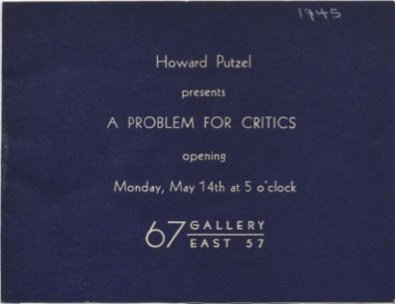
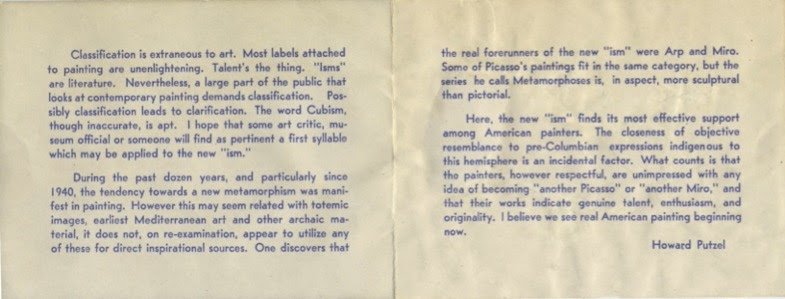
 

Shown: An announcement of the opening of "A Problem for Critics" shown at 67 Gallery, New York in 1945.


JB: Were you people interested in the abstraction of George L.K. Morris and the people in the American Abstract Artists group? Did you have much contact with them?
AG: No. Well, they were friendly. Actually what happened, as I see it, was that the American Abstract group was very dogmatic about their idea of abstraction. If anybody had any figurative tendency at all his work was taboo. At that point, I, and a lot of other artists, didn’t share that view.
JB: You didn’t agree with the Metropolitan Museum, I believe, in 1950 when the eighteen of you – 
AG: That’s right. That was the Pepsi-Cola show. The objection was that there were two local jurors in all parts of the country which would make it regional. I think part of our viewpoint was against regional art which was one of the big phases of American art. We felt that regional art provincial and retrogressive.
JB: What you called the “Corn-Belt Academy” in your letter to the New York Times in 1943?
AG: That’s right. I’d forgotten about that.
JB: You wrote in Tiger’s Eye in 1947 about your art being “…the expression of the neurosis which is reality.” That sounds parallel to Surrealist concerns. What do you think of this in terms of your art today?
AG:Well, I think it has a relationship. You see, I was very much interested, as a lot of artists were, in Jung at the time. I accepted the idea of a universal unconscious.
JB: And by working in this kind of imagery you were getting to this universal unconscious by speaking a kind of common language. Yet, don’t I understand that you feel you are really not trying to paint for the masses?
AG: Good lord, no. Just the reverse. You know what Gorky called Social Realism at the time? He called it poor art for poor people.
JB: (Reading a question submitted in advance) “How essential is it to the livelihood of the artist for his imagery to be recognizably his own and do you feel this degree of sameness is a compromise to maintain a level of success?”
AG: That’s a very good question. Every day an artist has to examine his feelings and ask himself if this is what he really wants. It becomes more difficult if you are successful because you might be doing something to satisfy a demand; a market that’s been created. Or you might be doing just the opposite to be perverse. I have a great deal of perversity in me, so I always have to question it. I assume that this is true of lots of artists. If they weren’t a little perverse in some way they wouldn’t be artists. They would conform to something.
JB: The common question from students submitted to me in advance was, “Who or what had the greatest influence on your work?”
AG: Oh, Cimabue. He has a very forceful image.
JB: (Reading) “In your earlier pictograph paintings even though individual, personal symbols were compartmented, the surface treatment of painting appeared to have an all-over sameness. In later “Blast” pictures a different approach is employed in the execution of the top half of the painting from that used in the bottom half. What is your feeling about the idea, perhaps best exemplified by the color-field painters, that a painting should be all of one piece?


Adolph Gottlieb, Recurrent Apparition, 1946, oil on canvas, 37 x 55 x 1 3/4", Chazen Museum of Art.


AG: That’s a good question. I’ll try to explain it.  When I did the pictograph paintings I was thinking of them as all-over paintings, with no focal point and no beginning – they ran out on all four sides. And I reached a point where I felt that I had enough of all-over painting and that it was a kind of New York mania. I wanted to buck the other painters and all I had been doing, so I reversed myself and decided to make paintings with a definitive focal point, which at the same time would control in some subtle way the space of painting. I think it’s just as simple as that. Just that I decided I might go do a different kind of painting.
JB: In your later works, do you use trowels and other kinds of devices on the bottom part of those paintings where one sees those big strokes?
AG: I work in many ways. I try everything. Miro once said that he tried everything including urinating on the painting. I doubt that he did it.
JB: (Reading) “Many people sincerely feel that Jackson Pollock is the greatest painter of our century. How do you feel about this?
AG: I think that he is vastly over-rated. I think he used to seem to be a violent painter. He now seems to me to be a gentle, lyrical painter, especially in the painting at the Met called “Autumn Rhythm.” It is a very gentle, lyrical painting. And when you met him as a man, if you got him when he was sober, he was very gentle.
From the Floor: In your opinion what should be the function of an art instructor in a university?
AG: I am very much in wonder as to what the function of the instructor is. I don’t think the instructor can make an artist out of someone who isn’t an artist. I think that you are an artist when you start or you’re not. There is no such thing as an art student unless you accept the idea that you are a student all of your life. I don’t think that the university is the good place at all. I think the place to go is to a museum. You have to go and look at Chardin and Courbet and see how they did it. If you don’t have the capacity to learn, nobody can give it to you. Years ago the big question was that everyone was looking for a key or a clue; some sort of formula for making a work of art. Nobody ever found it.
From the Floor: What is your opinion of the art of 1960s: Funk and Junk, Op and Pop, Minimal art and art of the 1970s?
AG: I think that my generation is largely responsible for a lot of it and I feel ashamed for us.
JB: In what way do you feel responsible? 
AG: Anything could be a work of art – almost anything- and the artist was completely free to do anything he chose.
From the Floor: You implied that contrary to painting for the masses, your art was a very personal and private statement. I wonder if that could be extended to invalidate the political and social art forms.
AG: I think the didactic art that the Mexicans tried to do had no value because whatever message they had could have been gotten across to the masses better by television or the movies. The same thing is true in the Soviet Union. Their painters, I believe, convinced very few people.
From the Floor: I wasn’t thinking in terms of “convincing” but rather “commenting.”
AG: Oh, “commenting.” If there is no convincing, what’s the value in the comment?
From the Floor: I wonder if you have ever experimented with polymer or other synthetic paints?
AG: I have used acrylics, that’s all. I think that one of the worst things about contemporary painting is the excessive use of acrylics and masking tapes.
From the Floor: When you say Abstract Expressionists have become a major influence in the world, was the acceptance gradual or overnight – as a group or individually? How did it happen?
AG: It took many years to get acceptance. That put us in the position of being part of the establishment which wasn’t very comfortable.


Shown: Adolph Gottlieb, Burma Red, 1973, oil and alkyd on canvas, 90 x 60"


From the Floor: Can you comment on what the function of critics might be, if any – critics like Greenberg and Rosenberg?
AG: I think people like Greenberg and Rosenberg have a great deal of influence.
From the Floor: Do you think it is all to the good?
AG: Frankly, if they are on my side, I think it is good.
From the Floor: In titling your paintings, how do you come about the wording if, as you say, the subjects are very personal and not able to be understood by using words.
AG: I have a great deal of difficulty with titles. I like them to be ambiguous. I look at the painting and I try to think of what it suggest. I’ll come up with that kind of a title which is ambiguous. It is very generalized and somewhat abstracted.
From the Floor: You were saying that students should go to a museum. Do you mean by this that a serious art student should study the big names and imitate their styles before starting his or her own style?
AG: Yes, the big names. I don’t think they will form their own style until they have done that.
From the Floor: Is it harder for a woman to get established – to get a name? If it is, how much longer will it take?
AG: I think it is harder for a woman especially if she is black.
From the Floor: How long was it before you became self-supporting from your art?
AG: It wasn’t until about the 1950s. There was a parallel question asked by a student when I was teaching at UCLA, “Mr. Gottlieb, about how much do you make a year from your paintings?” I said that is between me and the Treasury Department.
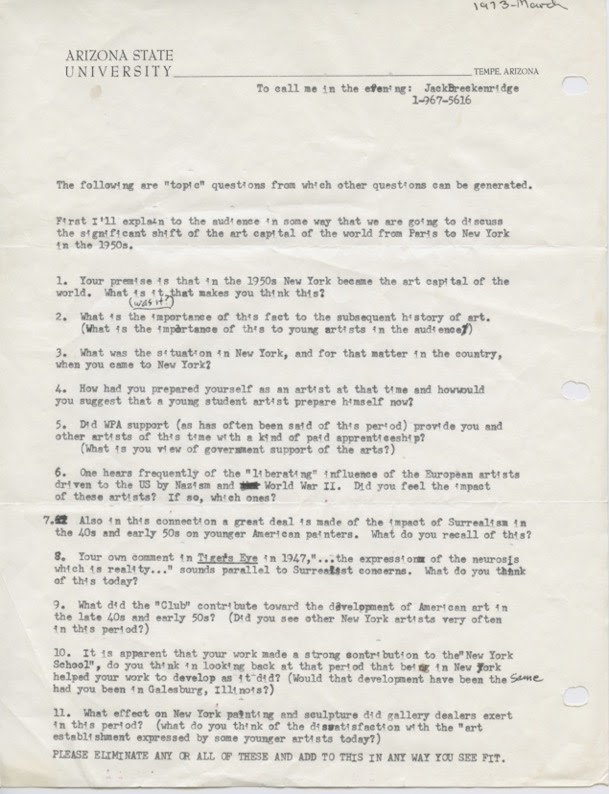
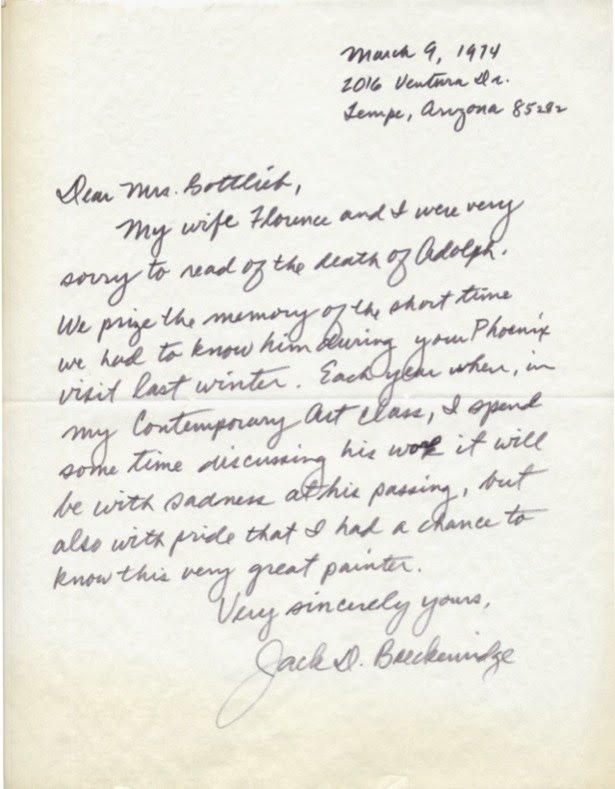
 

Shown: (left): Questions to be asked in the interview sent to Adolph Gottlieb before the event, March 1973. (right) A condolence letter from Jack Breckenridge sent to Esther Gottlieb after the death of Adolph Gottlieb in March 1974.
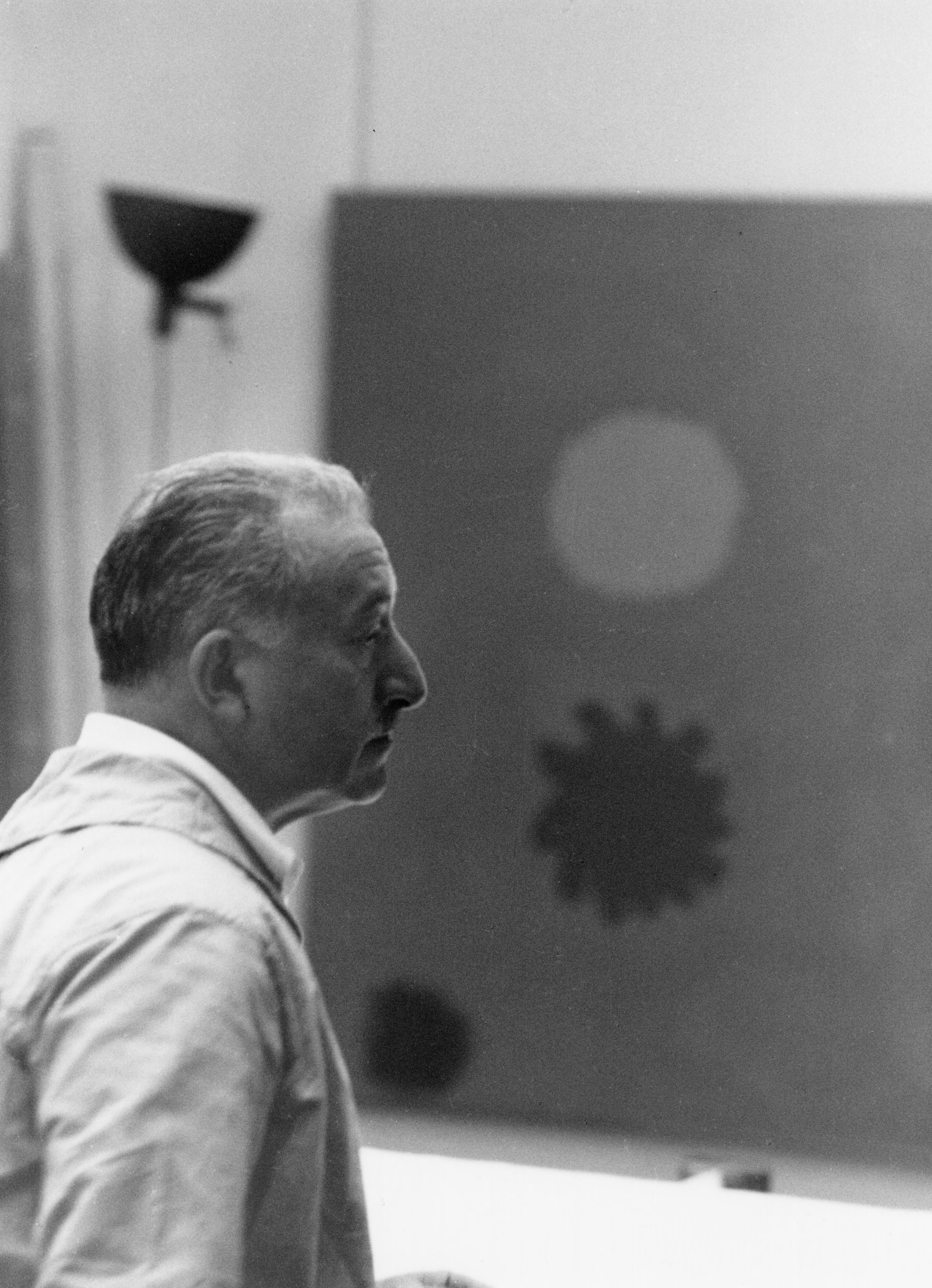
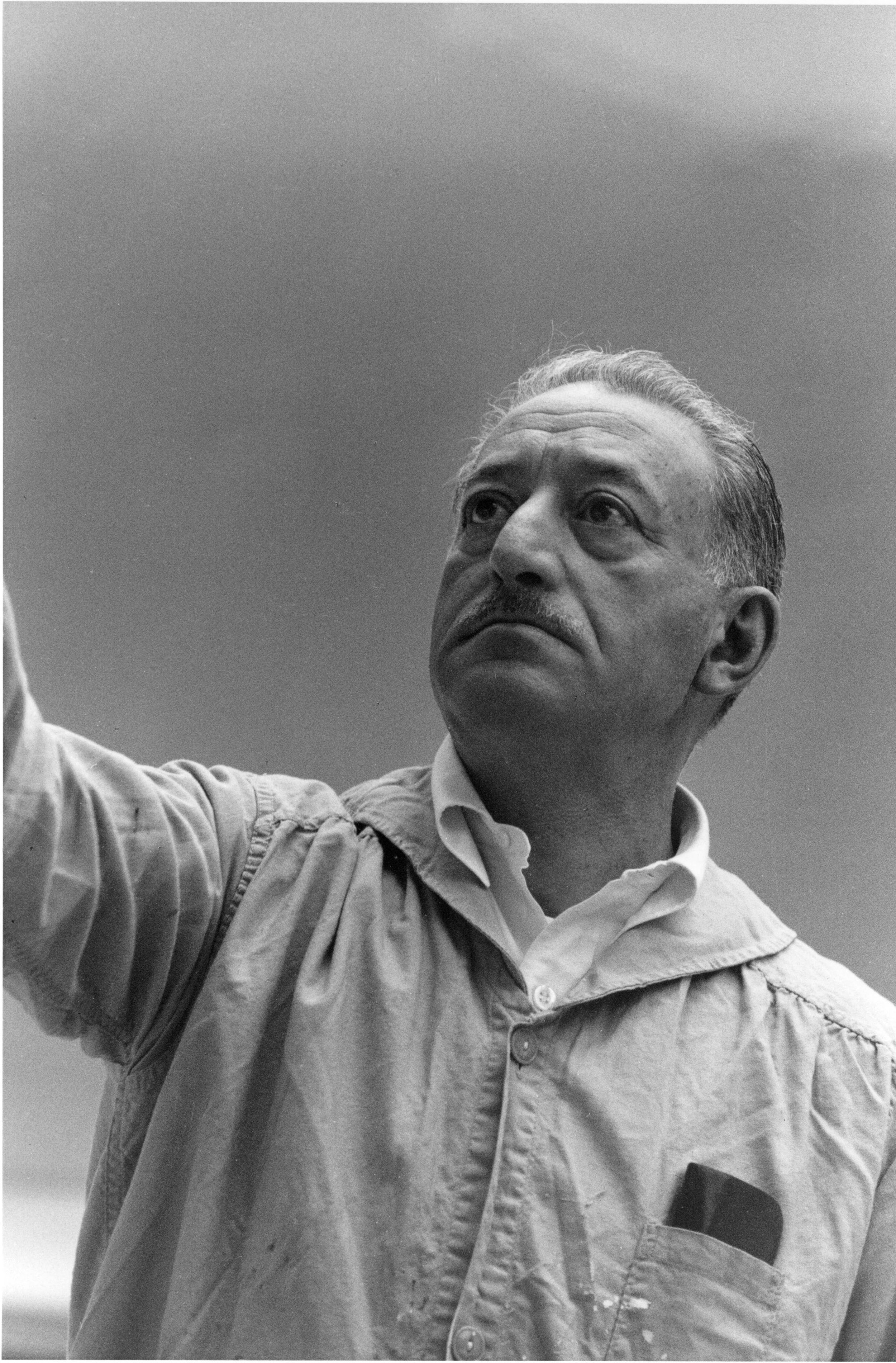
Recently Discovered Photographs of Adolph Gottlieb by Robert Estrin


Shown: Adolph Gottlieb at work in his 22nd Street studio, New York, NY, c. 1965, photography ©Robert Estrin


Circa 1965, Adolph Gottlieb was visited by his nephew and photographer Robert Estrin. Estrin captured images of the artist at work in his studio located at 940 Broadway (and 22nd Street) in New York City and recalled that Adolph was "quiet and immersed in his work." These photographs are not only a rare glimpse of the artist at work but also allow us to see the studio that was destroyed in a tragic fire in 1966.

The recently discovered photographs from that day are highlighted below.

Shown: Adolph Gottlieb and unknown man in the artist's 22nd Street studio, New York, NY, c. 1965, photography ©Robert Estrin

Shown: Adolph Gottlieb and unknown man in the artist's 22nd Street studio, New York, NY, c. 1965, photography ©Robert Estrin


Shown: Adolph Gottlieb at work in his 22nd Street studio, New York, NY, c. 1965, photography ©Robert Estrin


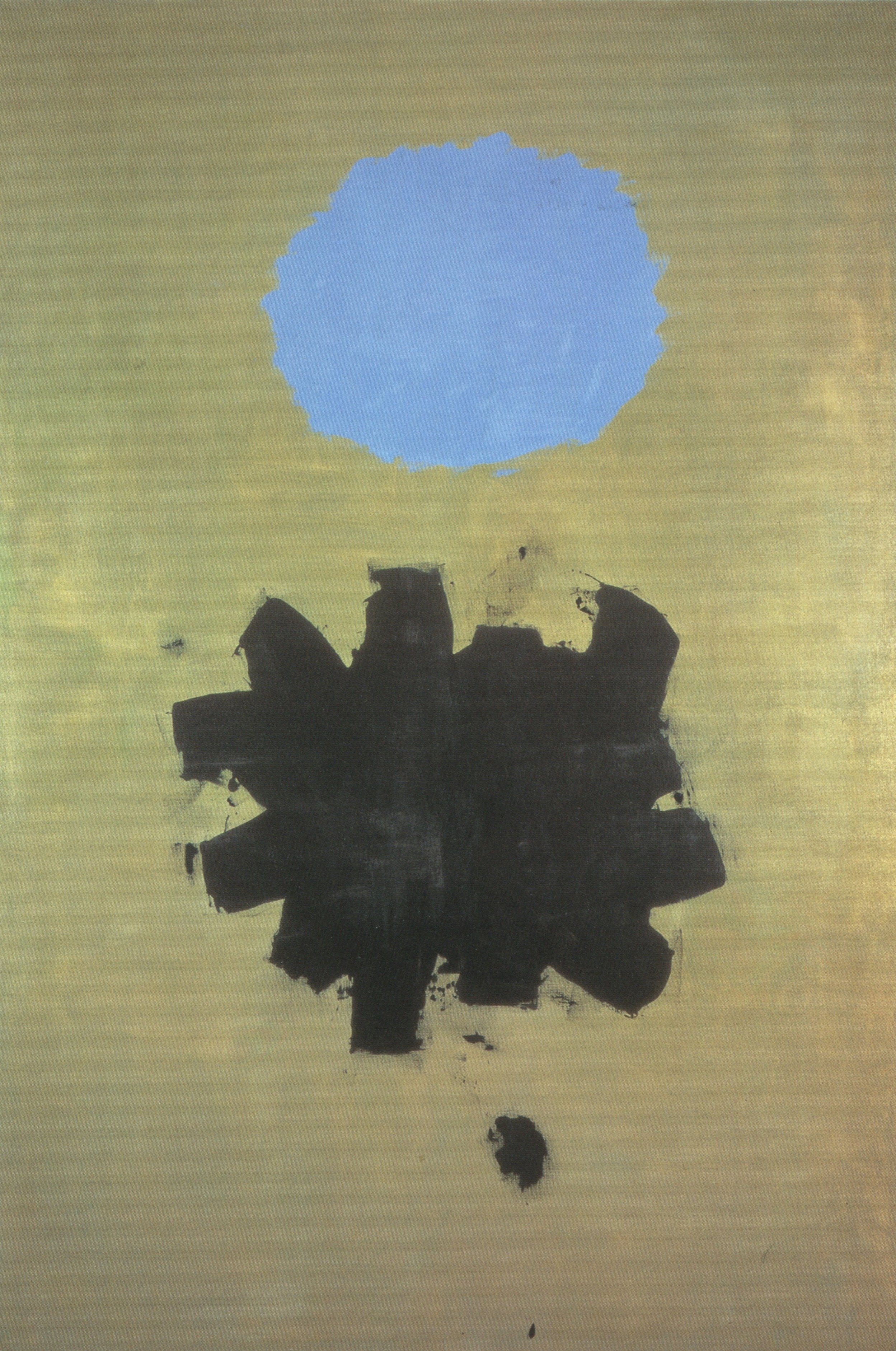
Shown: The Gottlieb paintings seen in Robert Estrin's photographs. (From left to right): Ambient Green, 1962, oil on linen, 90 x 72”, Red and Blue, 1962-65, oil on canvas, 108 x 90”, Soft Blue - Soft Black, 1960, oil on canvas, 90 x 60”.


Shown: Adolph Gottlieb at work in his 22nd Street studio, New York, NY, c. 1965, photography ©Robert Estrin


Shown: Adolph Gottlieb at work in his 22nd Street studio, New York, NY, c. 1965, photography ©Robert Estrin

From the Archive: Adolph Gottlieb and Mark Rothko

"During the thirties and forties, Mark and I used to get together and talk. He was one of the few guys who was articulate because in those days painters were sort of silent men."
Adolph Gottlieb in an interview with Dore Ashton, February 4, 1972


Shown: Adolph Gottlieb (left) and Mark Rothko (right) at an unknown opening, March 6, 1961. Photographer: Fred McDarrah.


Adolph Gottlieb and Mark Rothko first met in the late 1920s and remained close friends throughout their lives. Through a selection of archival documents, interviews, and artwork, we are highlighting several important moments in their lives and careers.

"I first met Mark at the Art Center Gallery on 56th Street, one of the little galleries introducing new artists. We both used to go to the Opportunity Gallery around 1928 or 1929. Every month they used to show young artists and they usually got some well-known artist to judge, such as Kuniyoshi or Alexander Brooke. Mark and I and Milton Avery frequently got into those shows."
Adolph Gottlieb in an interview with Dore Ashton, February 4, 1972

"We all went to Gloucester together and once we went to Vermont. And Adolph and Esther came up and took a house near us. But in Gloucester, Rothko came up and Gottlieb came up. They were about ten years younger than Milton, but they all respected him a great deal and they used to hang around, as we'd say. You know, in the City, actually, Rothko lived across the street from us and he'd be at our house almost every night. And Gottlieb would come in very often. And, you know, they'd bring their girlfriends and finally, they'd bring their wives when they had them and it was like a close-knit family really. We were very close."
Sally Avery, recalling the decade of the 1930s, in a 1982 interview with Tom Wolf


Adolph Gottlieb, Mark Rothko, c. 1933-35, gouache, 20 x 16"

Mark Rothko, [Seated man], 1937/39, graphite on bond paper, 5 1/2 x 4", (possibly Gottlieb).


After meeting Avery in 1929, Gottlieb often visited him with Mark Rothko, first at the Averys' studio in Lincoln Square, then at 72nd Street where they moved around 1930. Gottlieb and Rothko were greatly inspired by Avery and often worked in his studio, sketching each other and working from the same life models.

Gottlieb viewed myth as an alternative to realism, which he wanted to avoid. He recalled saying to Rothko around 1941, "'How about some classical subject matter like mythological themes?' And we agreed... Mark chose to do some themes from the plays of Aeschylus, and I played around with the Oedipus myth, which was both a classical theme and a Freudian theme."
– A passage from "Adolph Gottlieb, A Retrospective" Exhibition Catalogue

1943: Letter to the Times


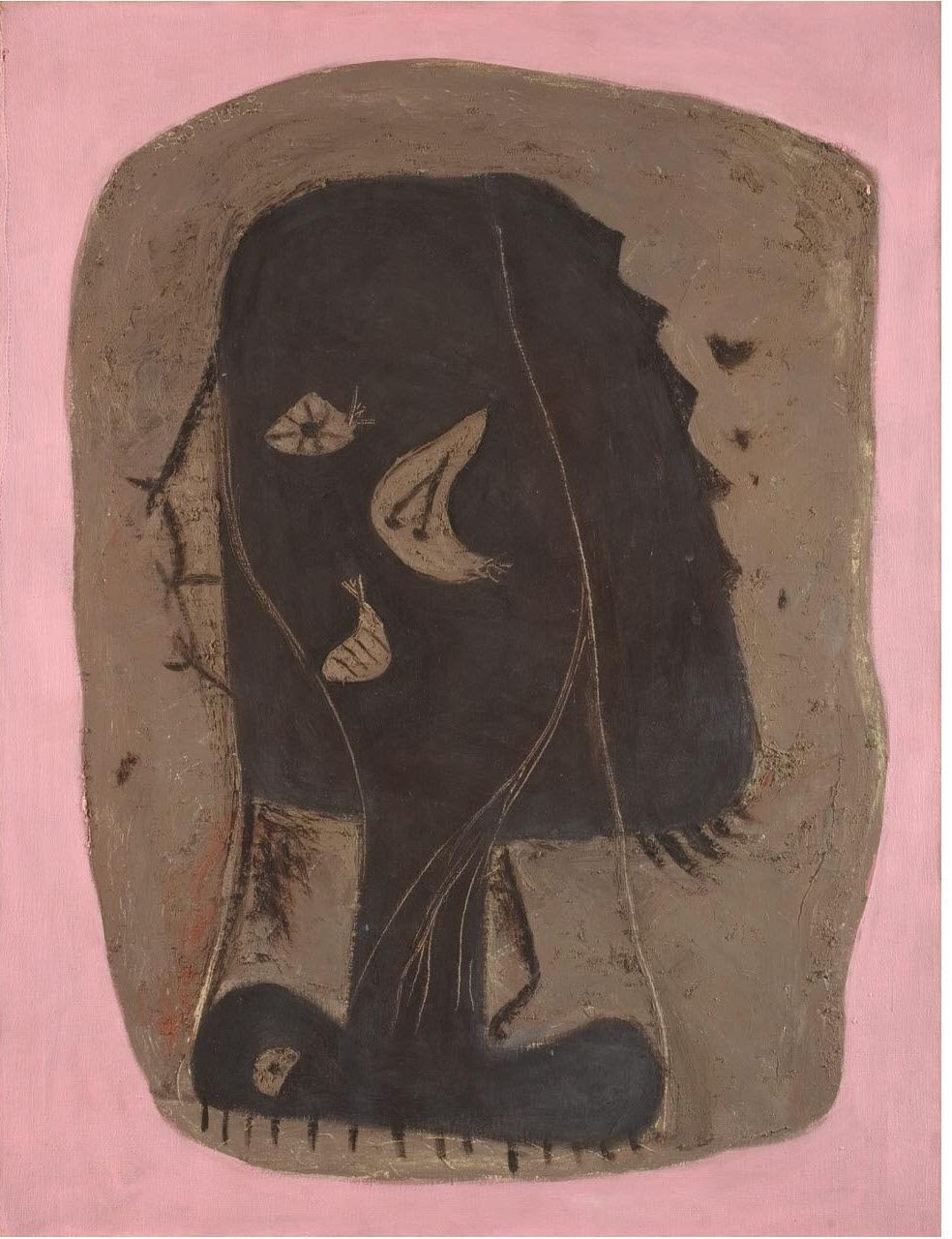
Adolph Gottlieb, The Rape of Persephone, 1943, oil on canvas, 34 3/16 × 26 1/8", Collection of the Allen Memorial Art Museum.

Mark Rothko, The Syrian Bull, 1943, oil and graphite on canvas, 39 3/8 × 27 13/16", Collection of the Allen Memorial Art Museum © 1998 Kate Rothko Prizel & Christopher Rothko / Artists Rights Society (ARS), New York.


"We were having a show at Wildenstein’s, the Federation of American Painters and Sculptors around 1943 and Edward Alden Jewell reviewed the show. He said he couldn’t understand two of the paintings. I called him up and asked that if we’d explain them would he print it. He said yes so I called up Mark and we were close to Barney [Barnett Newman] and Barney was a bit of a writer. So Barney drafted an introduction to our statement."
Adolph Gottlieb in an interview with Dore Ashton, February 4, 1972

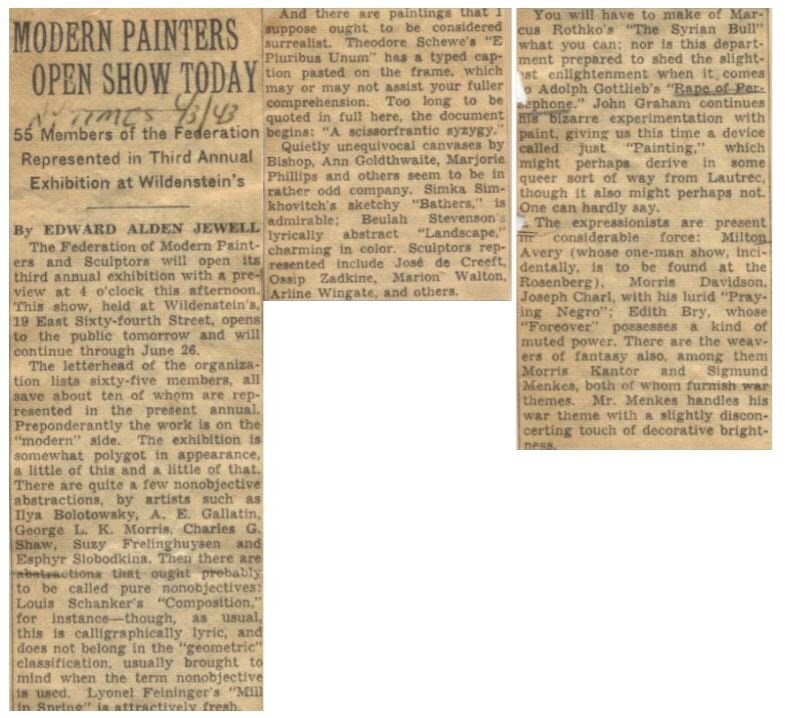
In June of 1943, Adolph Gottlieb and Mark Rothko exhibited new paintings in an exhibition of the Federation of Modern Painters and Sculptors. Edward Alden Jewell, senior art critic at the New York Times, published a lukewarm review of the show. Jewell wrote, "You will have to make of Marcus Rothko's The Syrian Bull what you can; nor is this department prepared to shed the slightest enlightenment when it comes to Adolph Gottlieb's Rape of Persephone." In response, Gottlieb and Rothko wrote a letter that was published a few days later in the New York Times. This letter served as the first formal statement of concerns of the artists who became known as the Abstract Expressionists.


Edward Alden Jewell's review in the New York Times, June 1943.

Adolph Gottlieb and Mark Rothko's response to Edward Alden Jewell's review in the New York Times, June 7, 1943.


"We do not intend to defend our pictures. They make their own defense. We consider them clear statements. Your failure to dismiss or disparage them is prima facie evidence that they carry some communicative power."
Adolph Gottlieb and Mark Rothko in their response to Edward Alden Jewell, June 7, 1943


The Rape of Persephone (left) and The Syrian Bull (right) installed at the Allen Memorial Art Museum at Oberlin College in 2017.


1943: WNYC Interview


On October 13, 1943, Adolph Gottlieb and Mark Rothko defended their use of myth and abstraction in their paintings in a radio interview titled The Portrait and the Modern Artist.


Adolph Gottlieb, Eyes of Oedipus, 1941, oil on canvas, 32 1/4 x 25"

Mark Rothko, Leda, 1940/41, oil on canvas, 25 1/2 x 17 1/2" © 1998 Kate Rothko Prizel & Christopher Rothko / Artists Rights Society (ARS), New York.


"Today the artist is no longer constrained by the limitation that all of man's experience is expressed by his outward appearance. Freed from the need of describing a particular person, the possibilities are endless. The whole of man's experience becomes his model, and in that sense, it can be said that all of art is a portrait of an idea."
Mark Rothko in The Portrait and the Modern Artist," from a broadcast on Art in New York, Radio WNYC, October 13, 1943.

"I think that anyone who looked carefully at my portrait of Oedipus, or at Mr. Rothko's Leda will see that this is not mythology out of Bulfinch. The implications here have direct application to life, and if the presentation seems strange, one could without exaggeration make a similar comment on the life of our time. [...] All genuine art forms utilize images that can be readily apprehended by anyone acquainted with the global language of art. That is why we use images that are directly communicable to all who accept art as the language of the spirit, but which appear as private symbols to those who wish to be provided with information or commentary."
Adolph Gottlieb in The Portrait and the Modern Artist," from a broadcast on Art in New York, Radio WNYC, October 13, 1943.

The WNYC interview "was helpful because they [Gottlieb and Rothko] both felt that they were sort of outcasts and the public was not interested in them. And that opportunity that first time at WNYC. I think they both felt very much that they lived isolated from the general public and I believe they did have a great deal of satisfaction out of being able to tell the world."
Esther Gottlieb in an interview with Phyllis Tuchman on October 22, 1981

1950: The Irascibles


In 1950, Gottlieb organized a protest against an exhibition jury at the Metropolitan Museum of Art, through which Gottlieb and his colleagues, including Mark Rothko, became known as "The Irascibles." The group is pictured below in the famous Life Magazine photo taken by Nina Leen.


Irascibles photo for Life Magazine, November 24, 1950. Photographer: Nina Leen, Life Picture Collection. Gottlieb is pictured in the back row, second from left. Rothko is pictured in the front row, seated at the right.


The Gottlieb/Rothko Friendship


Adolph Gottlieb and Mark Rothko were lifelong friends although very different personalities. They shared a number of experiences and stayed in touch with one another until shortly before Rothko's death in 1970. These two friends, who had collaborated on historically important actions earlier in their careers, jointly discussed and developed the idea of forming foundations that would utilize part of their estates to establish grant programs for mature artists. The Adolph and Esther Gottlieb Foundation continues to administer two grant programs for artists and it maintains an archive of the artists' papers that is available to scholars.

"We stayed friends. I felt that we all had had a difficult struggle which we shared to a large extent. We’d been together out of a need for mutual support. In the last few years when he was ill, it was hard to get him out of his studio. We’d usually go have lunch near his studio, Chinese food."
Adolph Gottlieb in an interview with Dore Ashton, February 4, 1972

"Art to me is an anecdote of the spirit and the only means of making concrete the purpose of its varied quickness and stillness."
Mark Rothko

“The very nature of abstraction, the very nature of abstract thought is to reduce the complexity of all of life and to bring it down to something very simple which embodies all this complexity.”
Adolph Gottlieb in a 1962 interview with Martin Friedman

Installation view of Adolph Gottlieb: Classic Paintings, The Pace Gallery, New York, NY 2/28/2019-4/13/2019, Artwork pictured (left to right): Adolph Gottlieb, Crest, 1959, oil on canvas, 108 x 90", Whitney Museum of American Art, Adolph Gottlieb, Aftermath, 1959, oil on linen, 108 x 90"

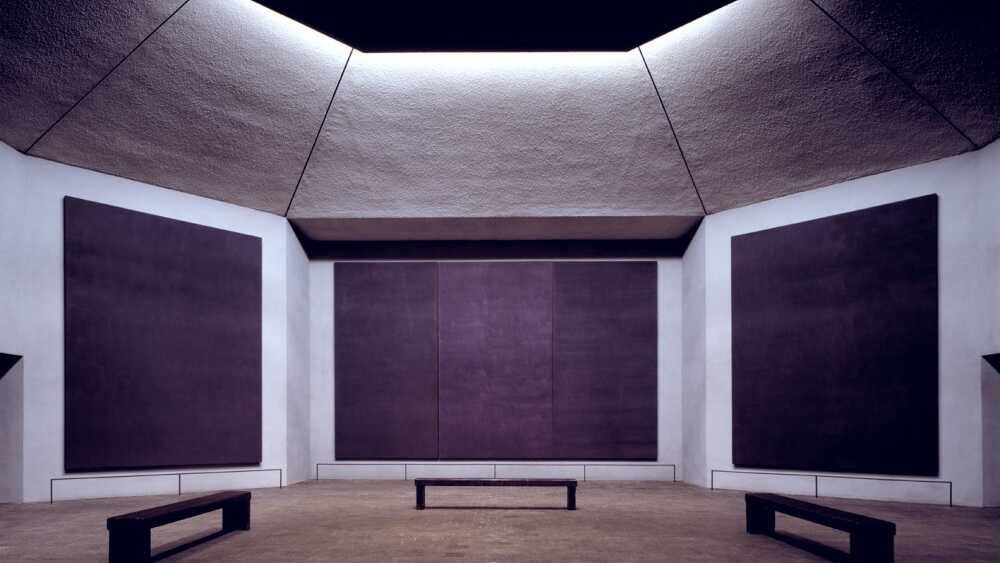
Mark Rothko, Rothko Chapel, 1964, Houston, TX. © Kate Rothko Prizel & Christopher Rothko / Artists Rights Society (ARS), New York.

A Look Back: Adolph Gottlieb and Forum 49

"Forum 49 was a summer-long series of sophisticated programs held in 1949, beginning with the forum "What Is An Artist?" and ending with the controversial "French Art vs American Art Today." Record crowds attended the exhibits of paintings and programs focused on the avant-garde in many areas (architecture, psychoanalysis, poetry, jazz) all held in a gallery at 200 Commercial Street."
-Provincetown Art Association and Museum


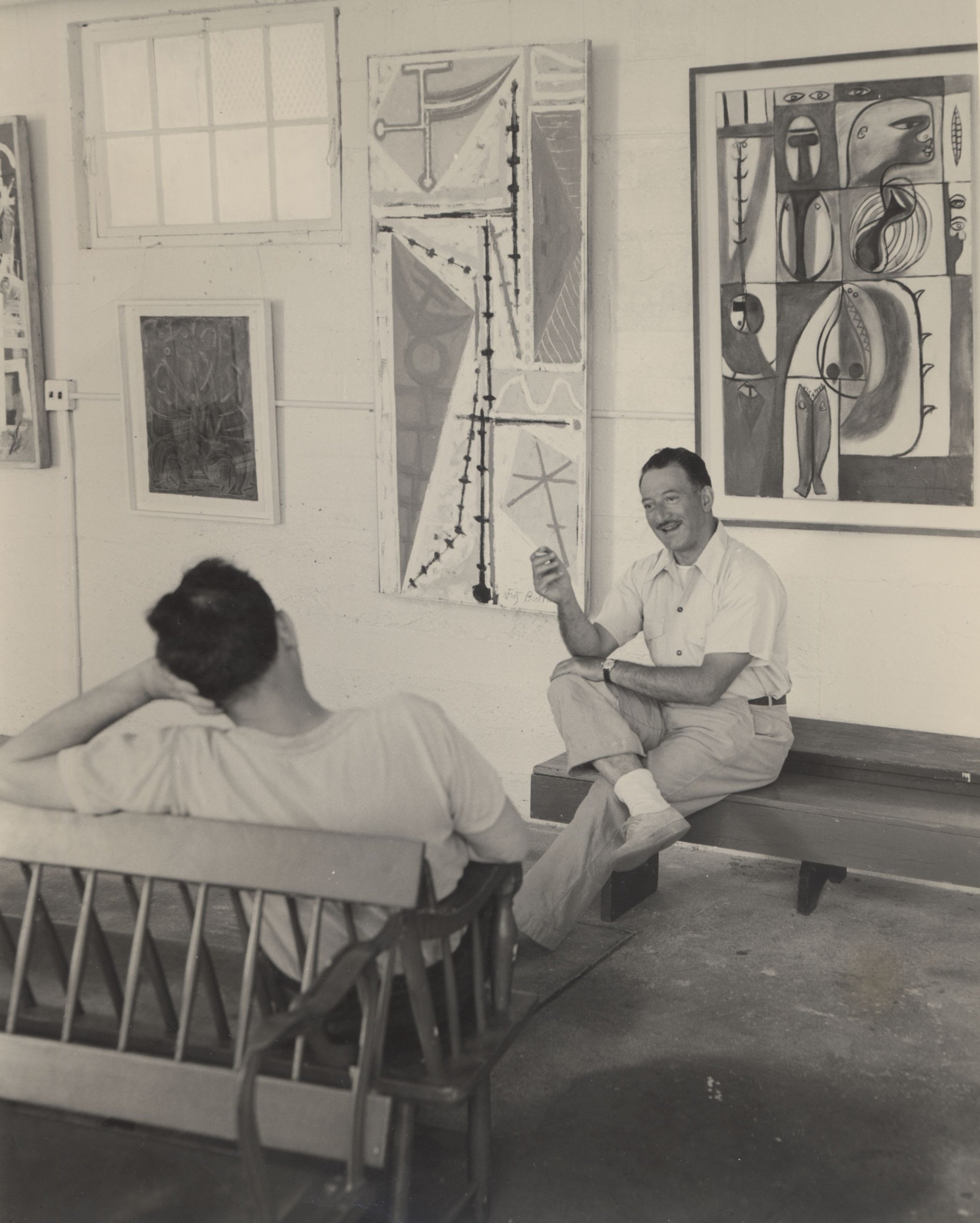
Shown: Adolph Gottlieb talking with Cecil Hemley at the Provincetown Art Association, sitting in front of Expectation of Evil (1945), Summer 1949. Photographer: Bill Witt.

Shown: Adolph Gottlieb, Expectation of Evil, 1945, oil, gouache & tempera on canvas, 43 1/8 x 27 1/8", currently in the collection of the Los Angeles County Museum of Art.


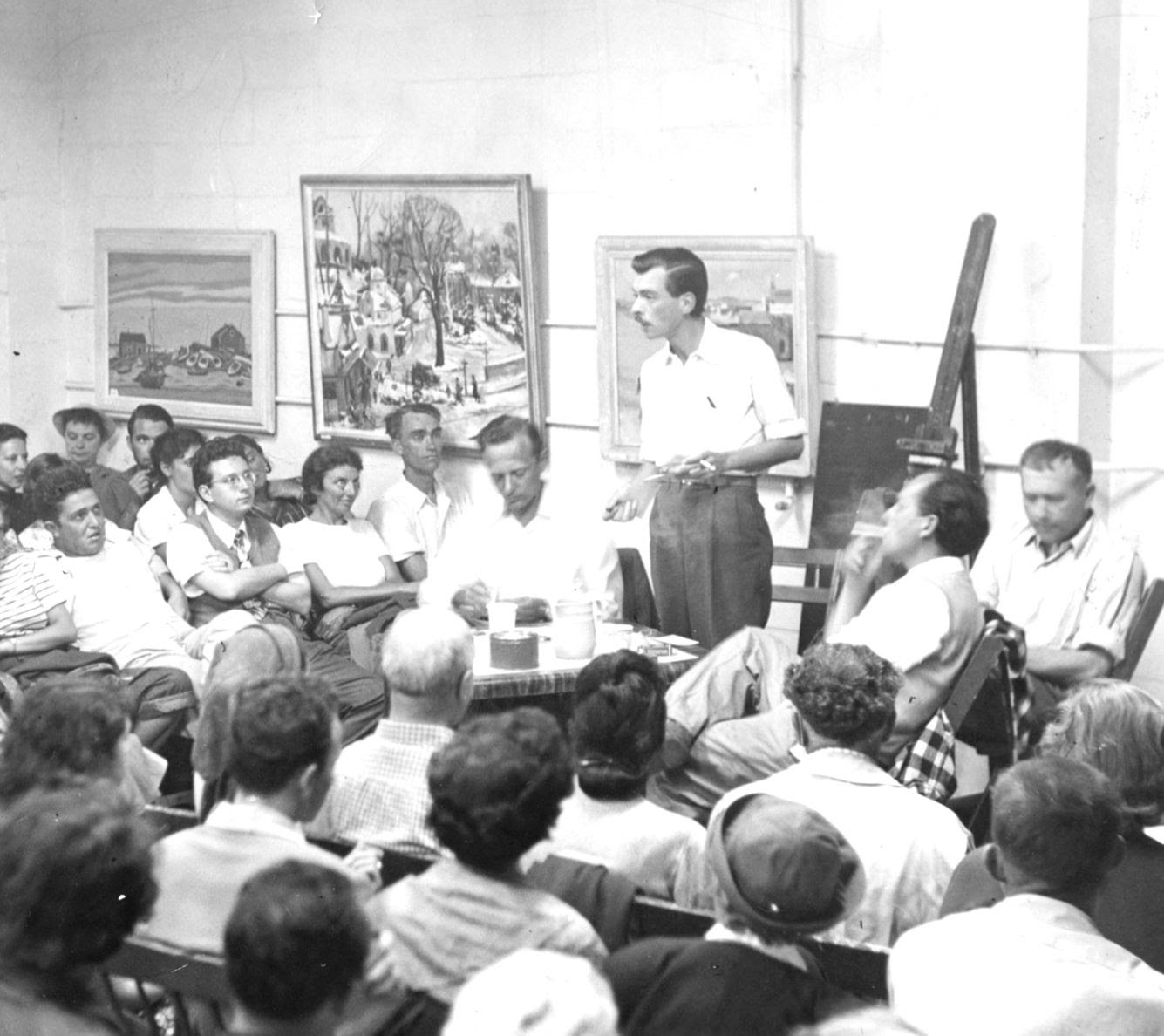
In Provincetown, Massachusetts in the summer of 1949, a group of artists and avant-garde thinkers led by Weldon Kees, organized a weekly series of speakers, readings, and discussions on various issues impacting the art, music, and literature of the day. Intended to promote the exchange of ideas among progressive artists and thinkers in diverse fields, Forum 49 included a major art exhibition, lectures, panel discussions, poetry readings, and more. It was conceived by painter/poet Weldon Kees, painter Fritz Bultman, and poet Cecil Hemley. All three were friends of Adolph Gottlieb's and they recruited Gottlieb to arrange loans of paintings by artists who were not regular visitors to Provincetown, as well as to organize two panels and be a featured speaker, and to be the nominal Chair of the entire event.

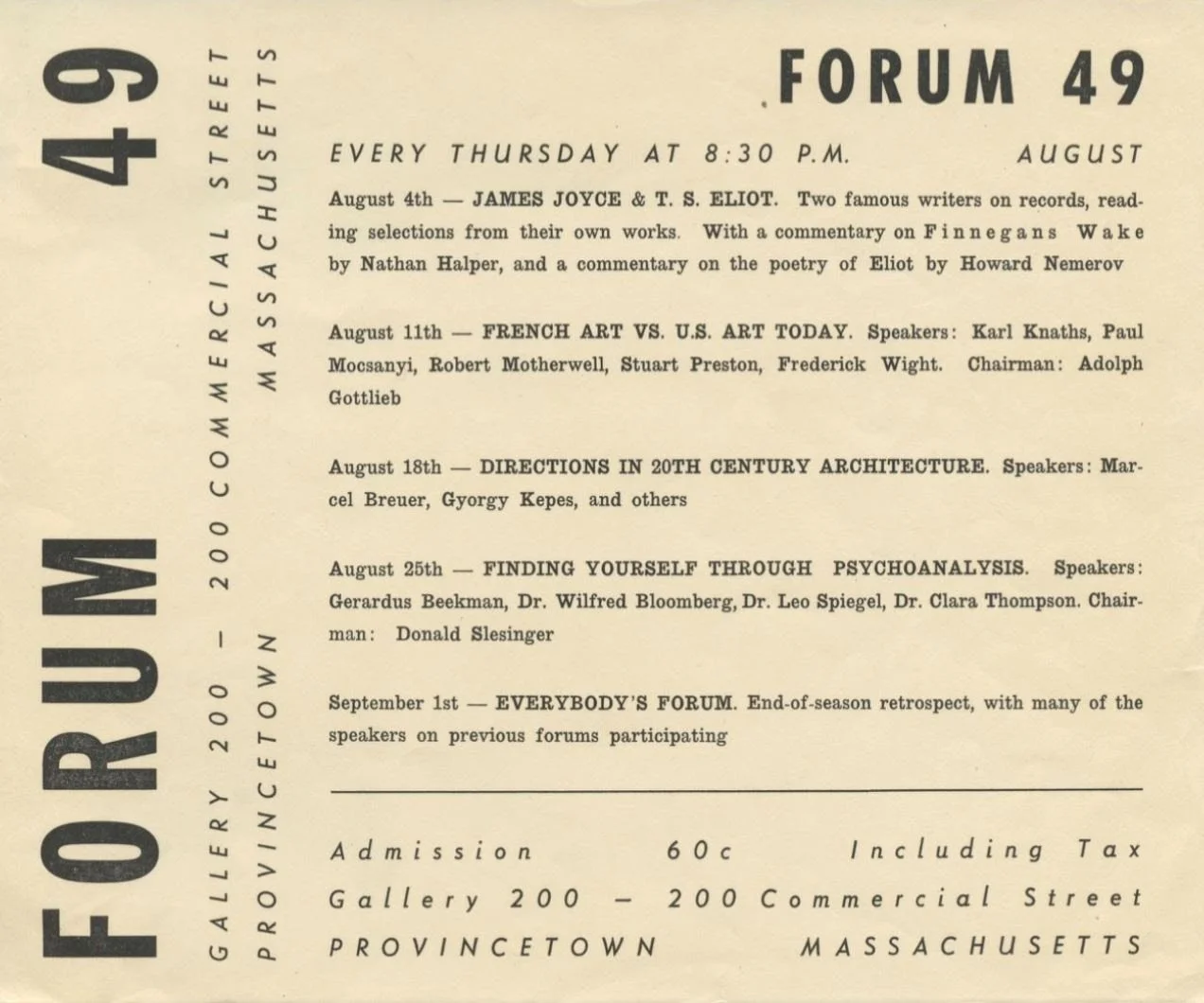
On August 11th, Gottlieb organized a panel and led the discussion for the topic "French vs. U.S. Art Today." The topic caused much debate among the audience and comments in the press from as far away as New York and Washington, DC. Forum 49 turned out to be a model for interdisciplinary artists' symposia, lectures, readings, events, and regular discussion groups like "The Club" in New York. It also made Provincetown a destination for more artists and others interested in new ideas.

Below is a selection of press, ephemera, and photographs from this monumental summer event.

"Now about the series of programs for this summer. At a meeting last night I made the suggestion that, to get a double-barreled effect, we should not only have a big opening on July 3, but also on that evening present the first of our programs. The series, incidentally, is to be called Forum 49, and we plan to plaster the Cape with posters and flood the press with publicity releases within the next few weeks. We all agree that the panel you are going to do is a natural for the July 3 opening."
–Weldon Kees in a letter to Adolph Gottlieb, June 8, 1949


Shown: Weldon Kees addressing a Forum 49 group, Provincetown, MA, Summer 1949. Courtesy Provincetown Art Association and Museum archive.


"Adolph Gottlieb, much-publicized of late as a leading figure among avant-garde painters, held the fort for so-called "unintelligible" art. To Mr. Gottlieb, the process of creation is guided by an element of mystery, -the artist by strong inner compulsions that force him to express what he feels, come what may. The ensuing violation of accepted patterns of thought were indicative not of chaos, Mr. Gottlieb stated, but of the evolution of new ideas. Defending the maze of rhythmic shapes and riotous color that surrounded the audience, he described them as the true art of today -the logical outgrowth and humanistic blend of the great traditions of cubism and surrealism."
- An excerpt from The Provincetown Advocate, July 7, 1949


Shown: A Forum 49 group, Summer 1949, Adolph Gottlieb is pictured in the center row, second from left. Seated to the right of Gottlieb are Karl Knaths and Weldon Kees. Photographer: Bill Witt. Courtesy Provincetown Art Association and Museum archive.


Shown: A Forum 49 group, Summer 1949, Adolph Gottlieb is pictured in the front row, second from left. Seated to the right of Gottlieb are Karl Knaths and Weldon Kees. Photographer: Bill Witt. Courtesy Provincetown Art Association and Museum archive.


"Gottlieb spoke of a Forum series that was organized in Provincetown in 1949 by Weldon Kees and others. Gottlieb was asked to organize a panel on the topic “French vs. American Art”. The topic raised quite a commotion and Fritz Bultman, who was then a Francophile (now he is anti-French), and Hans Hoffman got up a circular attacking the forum which they distributed outside of the hall. Later that evening Gottlieb met Hoffman at a party and asked him what he thought of the panel discussion. Hoffman said it was fine. Gottlieb asked him why he put out the circular. Hoffman said that he objected to the title, “American vs. French Art”. The French should have come first. Gottlieb told him it did in the title. “Oh”, Hoffman said, “Then it’s O.K.”
- Irving Sandler's Conversation with Adolph Gottlieb at the HCE Gallery, August 15, 1957, Irving Sandler Papers at the Getty Research Institute Special Collections

Shown: Schedule of events and advertisements for Forum 49 in the month of July, Provincetown, MA. Courtesy Provincetown Art Association and Museum archive.

Shown: Schedule of events and advertisements for Forum 49 in the month of August, Provincetown, MA. Courtesy Provincetown Art Association and Museum archive.

Portraits of the Artist: Adolph Gottlieb and Bob Adelman

"As I recall, we are going back 50 years, we met as neighbors both living at 25 West 96th. We became friendly and I photographed him out in the Hamptons sailing, with the collector Ben Heller and at his studio after the fire."
– Bob Adelman in 2015

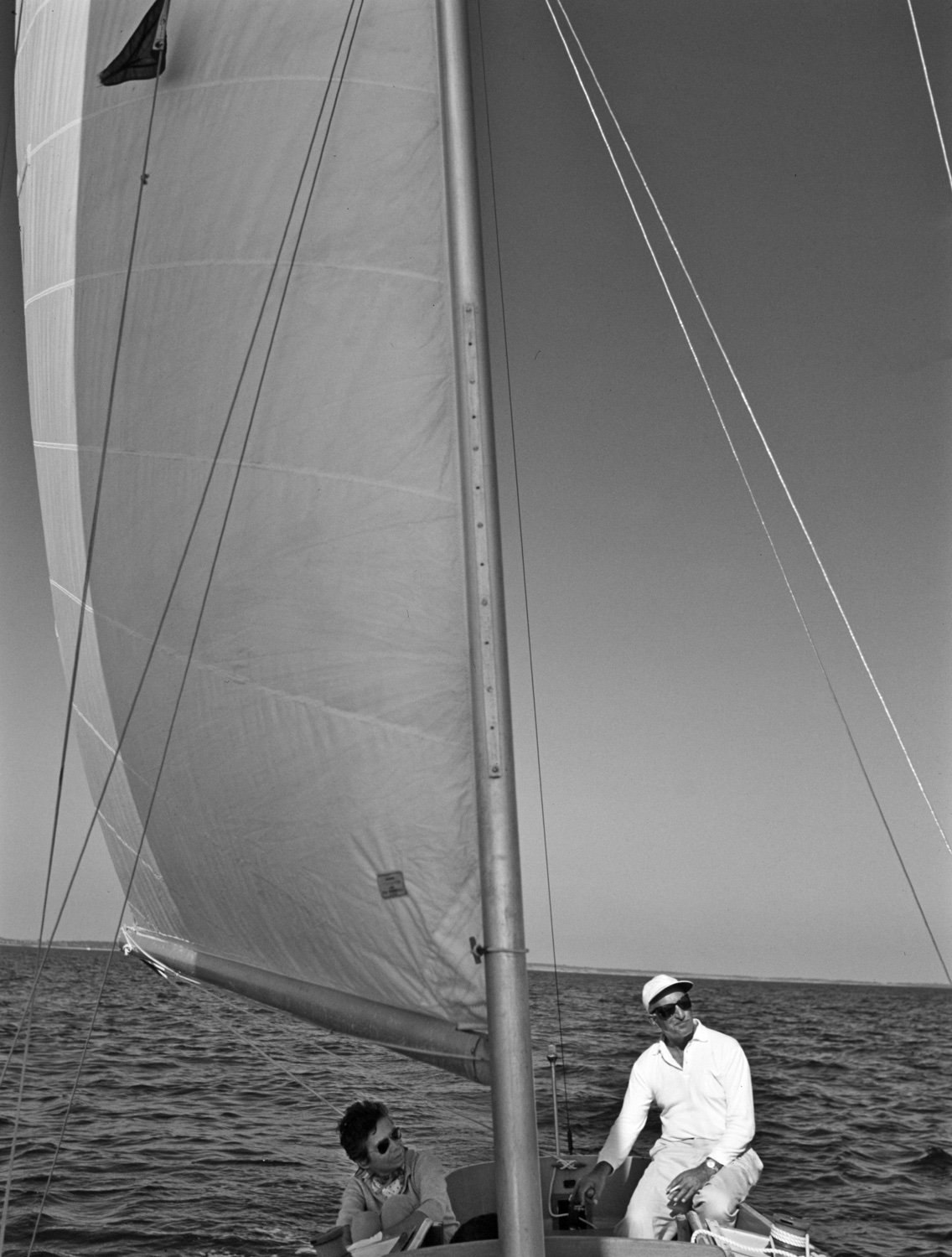
Adolph and Esther Gottlieb met photographer Bob Adelman (1930 – 2016) in the mid-1960s. The couple and Adelman spent time together at the Gottlieb's home in East Hampton, NY in the summer of 1964. There, Adelman captured dynamic photographs of the artist sailing and hosting company in his Apaquogue Road home. Back in New York City, Gottlieb and Adelman's friendship continued and was documented through Adelman's photographs of Gottlieb at home and in his studio.
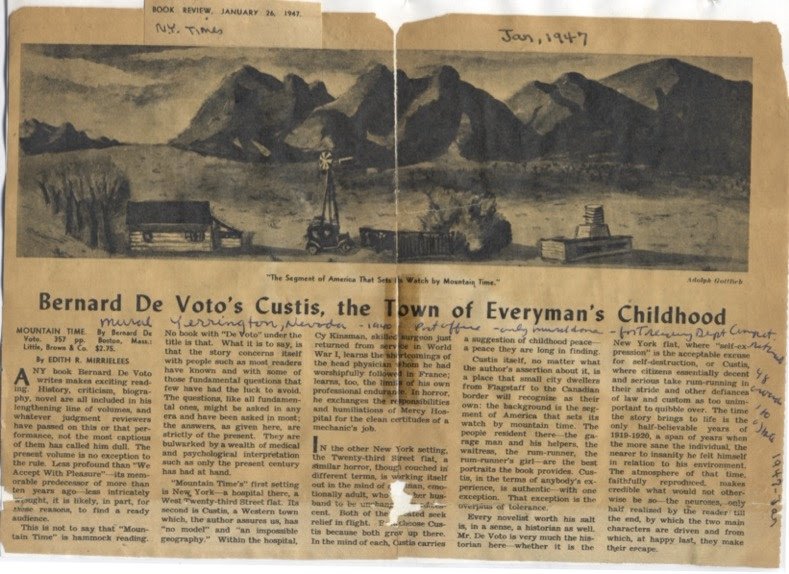
Below is a selection of photographs of Adolph Gottlieb taken by his friend Bob Adelman.

Shown: Adolph Gottlieb sailing in East Hampton, NY, 1964. photo: ©Bob Adelman
Shown: Adolph Gottlieb sailing in East Hampton, NY, 1964. photo: ©Bob Adelman

Shown: Adolph Gottlieb sailing in East Hampton, NY, 1964. photo: ©Bob Adelman

Shown: Adolph and Esther Gottlieb sailing in East Hampton, NY, 1964. photo: ©Bob Adelman

Shown: Adolph and Esther Gottlieb sailing in East Hampton, NY, 1964. photo: ©Bob Adelman

Shown: Adolph Gottlieb with collector Ben Heller at the Gottlieb's home in East Hampton, NY, 1964. They are sitting in front of the paintings (left to right) Red and Green (1961) and Roman Two (1961). Photographer: Bob Adelman.
Artwork pictured: Adolph Gottlieb, Red and Green, 1961, oil on canvas, 72 x 41 1/2 inches. Collection: Yale University Art Gallery.
Roman Two, 1961, oil on canvas, 72 x 60 inches ©Adolph and Esther Gottlieb Foundation/Licensed by ARS, New York, NY photo: ©Bob Adelman


Shown: Adolph Gottlieb photographed at home in front of his painting Groundscape (1956) New York, NY mid-1960s. Photographer: Bob Adelman.
Artwork pictured: Adolph Gottlieb, Groundscape, 1956, Oil on canvas, 84 x 144 inches ©Adolph and Esther Gottlieb Foundation/Licensed by ARS, New York, NY photo: ©Bob Adelman


Shown: Adolph Gottlieb photographed at home in front of his painting Groundscape (1956) New York, NY mid-1960s. Photographer: Bob Adelman.
Artwork pictured: Adolph Gottlieb, Groundscape, 1956, Oil on canvas, 84 x 144 inches ©Adolph and Esther Gottlieb Foundation/Licensed by ARS, New York, NY photo: ©Bob Adelman

Shown: Adolph Gottlieb photographed in his 22nd Street Studio making a note of the verso of Green Haze (1966), New York, NY mid-1960s. Photographer: Bob Adelman.
Art: Adolph Gottlieb, Green Haze, 1966, oil on canvas, 72 x 90 inches ©Adolph and Esther Gottlieb Foundation/Licensed by ARS, New York, NY photo: ©Bob Adelman

Shown: Adolph Gottlieb photographed in his 22nd Street studio, New York, NY mid-1960s. photo: ©Bob Adelman

Shown: Adolph Gottlieb photographed in his 22nd Street studio. He is in front of (left to right) Icon (1964) and an unidentified painting New York, NY mid-1960s. Photographer: Bob Adelman.
Art: Adolph Gottlieb, Icon, 1964, Oil on canvas, 144 x 100 inches ©Adolph and Esther Gottlieb Foundation/Licensed by ARS, New York, NY photo: ©Bob Adelman

Born in New York City in 1930, Bob Adelman grew up on Long Island and earned degrees from Rutgers University, Harvard University, and Columbia University. He studied photography with Alexey Brodovitch, the famed art director of Harper’s Bazaar magazine whose influence can be seen in the haunting beauty of Adelman’s images. With an avid interest in social and political events of the day, Adelman was drawn to the sit-ins staged by young students across the American South.

Throughout his career, Adelman captured some of the greatest New York artists. Adelman’s vast archive of New York artists includes photographs of Andy Warhol, Roy Lichtenstein, James Rosenquist, Larry Rivers, Donald Judd, Jasper Johns, Marisol Escobar, Red Grooms, Jeff Koons, Adolph Gottlieb, Barnett Newman, Robert Rauschenberg, Lucas Samaras, Jim Dine, David Hockney as well as influential New York art dealers. You can read Adelman's full bio here.

From the Archive: The Brooklyn Studios 1933-1956

Adolph and Esther Gottlieb lived in three different brownstones in Brooklyn Heights, NY from 1933 to 1956. In those early years, Adolph Gottlieb's studio was a small attic room and the kitchen, which he used during the day when Esther was out teaching. After working in small spaces for some years, the parlor floor of the brownstone at 130 State Street became available in 1954. The Gottlieb’s promptly rented it primarily as a studio for Adolph.

In a 1974 interview, Esther Gottlieb described the time they spent on State Street, saying "we were quite isolated." "We lived in Brooklyn Heights, and Adolph painted all day." In his new studio space, Gottlieb began to paint on a much larger scale. His larger canvases used almost the entire length of the 17-foot walls

In a 1981 interview with Phyllis Tuchman, Esther recalled how they managed when Adolph first began enlarging his paintings:

I can remember some of those paintings that Adolph did that were 17-feet long and were done in a room which was absolutely, that’s all the size the room was. Fortunately, it had a little alcove because those paintings had to be taken down. I would ask him, "later, when it's dry and you’re going to take it down, what are you going to do with it?" Adolph used to spread paper out, and between the two of us, we’d get the painting down onto the floor. And he’d say, “You don’t weigh very much. If you promise me you’ll only make one step lightly from there to there, then we’ll lift the painting and put its face to the wall so we can put the next one up.” But those are not the conditions today. Artists don’t work that way anymore.

Below are a few paintings that were made in the studio that Esther described during these years. Their expansive painted spaces filling the small, domestic-scaled room would be hard to forget.

Labyrinth #3, 1954, Oil and enamel on canvas, 80” x 185”
Currently in the collection of Ivam Centre Julio Gonzalez.

Black, White, Pink, 1954, Oil on canvas, 84” x 144”

Unstill Life III, 1954, Oil on canvas, 84” x 192”
Currently in the collection of the Museum of Modern Art, New York.

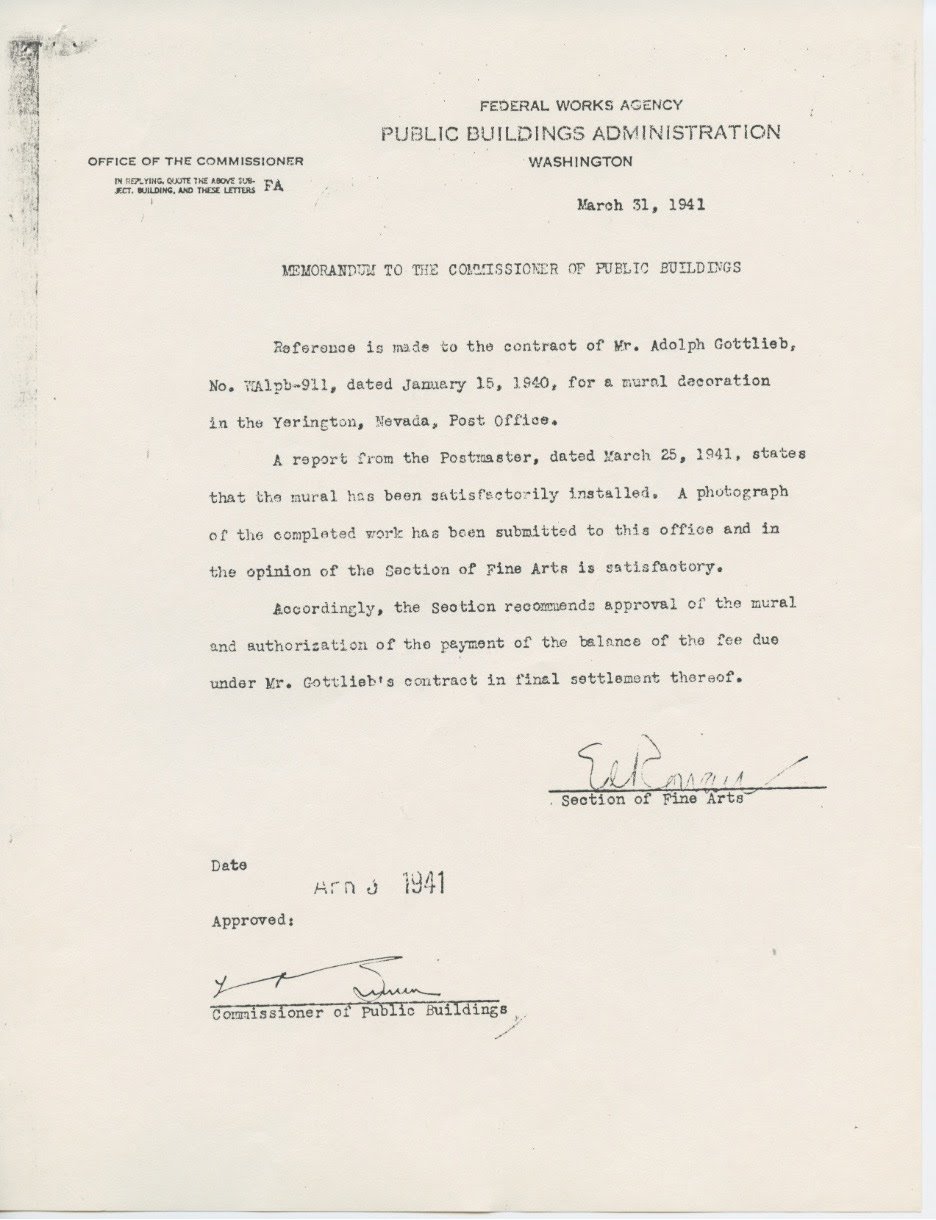
From the Archive: The Jewell Letters, "There's no such thing as good painting about nothing"

 
Shown: Adolph Gottlieb, The Rape of Persephone, oil on canvas, 33 x 25". Currently in the collection of the Allen Memorial Art Museum at Oberlin College.

Adolph Gottlieb, The Rape of Persephone, oil on canvas, 33 x 25"
Currently in the collection of the Allen Memorial Art Museum at Oberlin College


In June 1943, Adolph Gottlieb and Mark Rothko exhibited their new paintings in a large exhibition of the Federation of Modern Painters and Sculptors. This was the largest exhibition, and one of the earliest, to show one of Gottlieb's Pictographs as well as one of Rothko's mythic paintings.
Edward Alden Jewell, senior critic at the New York Times, published a lukewarm review of the show but paid special attention to Gottlieb and Rothko. Of Rothko's and Gottlieb's paintings specifically, Jewell writes, "You will have to make of Marcus Rothko's 'The Syrian Bull' what you can; nor is this department prepared to shed the slightest enlightenment when it comes to Adolph Gottlieb's 'Rape of Persephone.'"

1943-6-3 full.JPG

In response, Rothko and Gottlieb decide to pen a letter directly to Jewell. Each artist drafted his own response and they then sat down together to combine them into a single letter. They reviewed that draft with their colleague Barnett Newman, who they thought of as a writer, to help shape a final version which was signed by Gottlieb and Rothko and delivered to Jewell. The artists write, "We do not intend to defend our pictures. They make their own defense. We consider them clear statements. Your failure to dismiss or disparage them is prima facie evidence that they carry some communicative power."

 
letter to jewell full.jpg
 

The letter enumerates 5 aesthetic beliefs that were central to the artists' new direction:

  1. To us, art is an adventure into an unknown world, which can be explored only by those willing to take risks

  2. The world of the imagination is fancy-free and violently opposed to common sense.

  3. It is our function as artists to make the spectator see the world our way--not his way.

  4. We favor the simple expression of complex thought. We are for the large shape because it has the impact of the unequivocal. We wish to reassert the picture plane. We are for flat forms because they destroy illusion and reveal truth.

  5. It is a widely accepted notion among painters that it does not matter what one paints as long as it is well painted. This is the essence of academicism. There is no such thing as good painting about nothing. We assert that the subject is crucial and only that subject matter is valid which is tragic and timeless. That is why we profess spiritual kinship with primitive and archaic art.

These ideas precede any discussion of what we think of as Abstract Expressionism by years. But the ideas expressed in this letter were fundamental to the Abstract Expressionist movement.

Jewell incorporated these statements in his response published a week later (The New York Times, June 13, 1943).

 
Pictograph-Symbol, oil on canvas, 54 x 40". Currently in the collection of the Art Institute of Chicago

Pictograph-Symbol, oil on canvas, 54 x 40"
Currently in the collection of the Art Institute of Chicago


In October of that year, in a radio interview of Rothko and Gottlieb, Gottlieb defends their use of myth and abstraction in their paintings, presumably informed by their exchange with Jewell:

Everyone knows that Grecian myths were frequently used by such diverse painters as Rubens, Titian, Veronese and Velasquez, as well as by Renoir and Picasso more recently.
It may be said that these fabulous tales and fantastic legends are unintelligible and meaningless today, except to an anthropologist or student of myths. By the same token the use of any subject matter which is not perfectly explicit either in past or contemporary art might be considered obscure. Obviously this is not the case since the artistically literate person has no difficulty in grasping the meaning of Chinese, Egyptian, African, Eskimo, Early Christian, Archaic Greek or even pre-historic art, even though he has but a slight acquaintance with the religious or superstitious beliefs of any of these peoples
The reason for this is simply, that all genuine art forms utilize images that can be readily apprehended by anyone acquainted with the global language of art. That is why we use images that are directly communicable to all who accept art as the language of the spirit, but which appear as private symbols to those who wish to be provided with information or commentary.

– Adolph Gottlieb, "The Portrait and the Modern Artist," from a broadcast on
"Art in New York," Radio WNYC, October 13, 1943.

Pictograph, oil on canvas, 47 3/4 x 35 1/2". Currently in the collection of the National Gallery of Art in Washington DC

Pictograph, oil on canvas, 47 3/4 x 35 1/2"
Currently in the collection of the National Gallery of Art in Washington DC

4401.1.jpg

Pictograph, oil on canvas 35 15/16 x 24 7/8"
Currently in the collection of the Philadelphia Museum of Art

A Closer Look: Gottlieb's Maquettes


"I enjoy doing sculpture of course, but the special bang I get is having the feeling that I am a young sculptor just beginning, which is a nice feeling for an old painter like me"

– Adolph Gottlieb, “Art Now: New York”, September 1969, vol1, Number 7

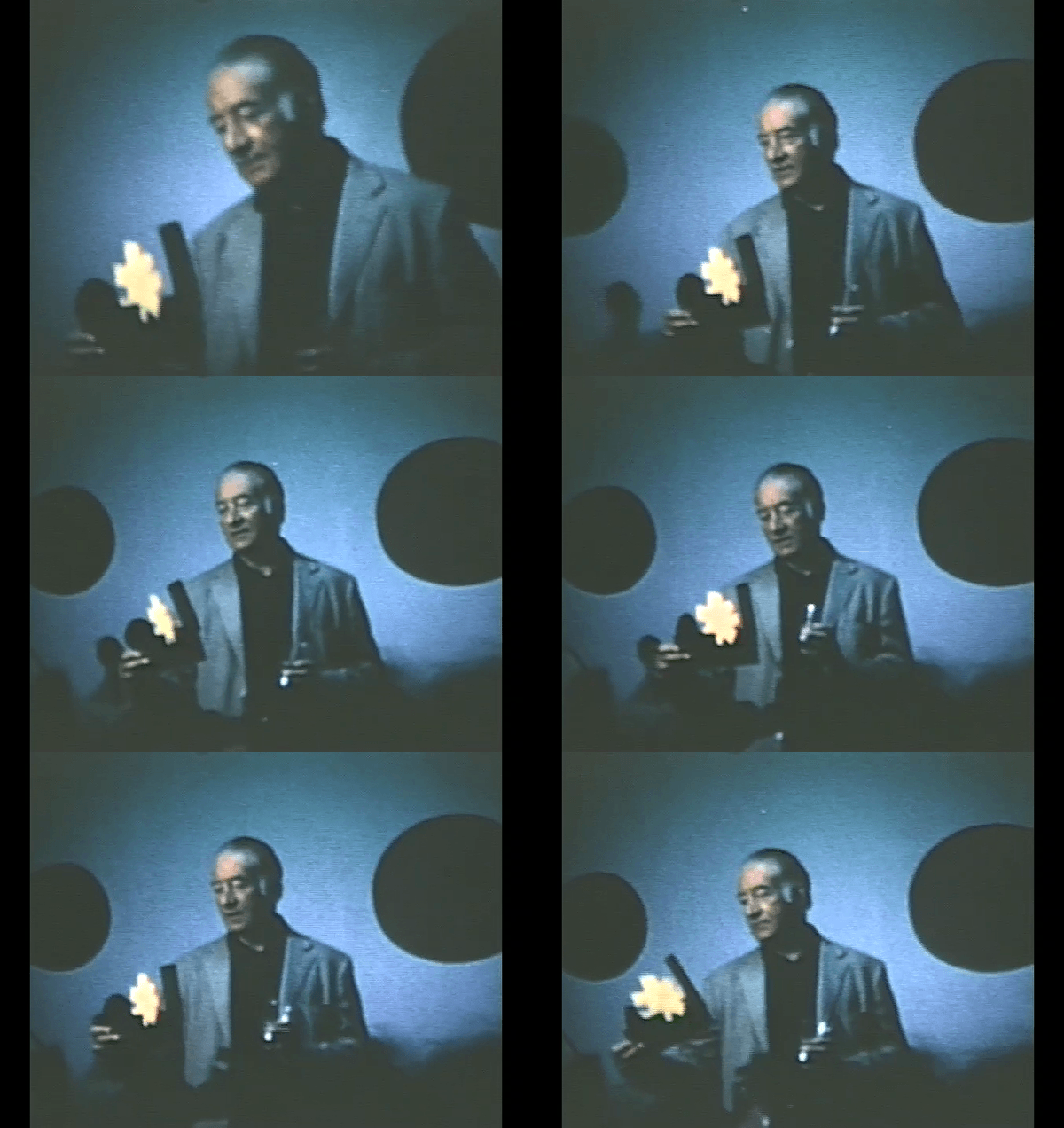
Above: Clip from the 1968 film of Adolph Gottlieb in his East Hampton studio, holding the maquette Petaloid. Film by Lee Hoffman.

Above: Clip from the 1968 film of Adolph Gottlieb in his East Hampton studio, holding the maquette Petaloid. Film by Lee Hoffman.

Adolph Gottlieb’s venture into sculpture lasted only about a year and a half, from 1968 to 1970, but in that brief time he created a body of work that challenged the delineation between painting and sculpture. In 1969 he recalled how he got started:

"I first got going with these sculptures in East Hampton when “Tony” (Bernard) Rosenthal saw a mock up in cardboard of a small piece and offered to help me work it out in bronze … I liked the look of the bronze but thereafter used only steel or aluminum because I wanted the painted look and the particular colors I chose.

Left: Two Arcs, 1968, maquette; acrylic on cardboard, 8 5/8 x 14 x 9"

Negative, 1968, maquette; acrylic on cardboard, 7 1/4 x 17 3/4 x 4 3/4"

Gottlieb began with small, cut-and-painted cardboard maquettes; the first of these were made from the cardboards used by dry-cleaners to keep shirts folded. Others of this group are made from pieces of corrugated cardboard. These very small objects, taped, stapled, bent, painted and molded by hand, were early visualizations of work that Gottlieb conceived for large, outdoor sculptures.

Wall, 1968, maquette; acrylic on cardboard, 8 7/8 x 13 1/2 x 8 1/4"

Untitled (Three DIscs), 1968, maquette; acrylic on cardboard, 5 3/4 x 8 x 4 1/4"

Oval Slanted, 1968, maquette; acrylic on cardboard, 4 3/4 x 8 x 5"

Arabesque, 1968, maquette: acrylic on cardboard, 13 1/8 x 17 1/2 x 6 1/4"

Like his friend, sculptor David Smith, Gottlieb’s background as a painter made it impossible for him to visualize objects without color. Or it may be, as some have observed of his sculptures, that he had to visualize color as physically real. All the fine points of his years of painting – touch, visual balance, surface quality, and more – are present in these small sculptures. As is the larger concept that drove Gottlieb’s art:

"I'm inclined to think that this is one of the points of the kind of painting I'm involved in – that the very nature of abstraction, the very nature of abstract thought is to reduce the complexity of all of life and to bring it down to something very simple which embodies all this complexity."

The Gottlieb Foundation is pleased to have included these maquettes in more recent exhibitions.

Installation photo of “Adolph Gottlieb: Small Images Spanning Four Decades 1938-1973” at Manny Silverman Gallery, Los Angeles, April 1995.  Painting: Looming #2 (1969), Maquettes: Petaloid (top) and Oval Slanted (bottom) (both 1968).

Installation photo of “Adolph Gottlieb: Small Images Spanning Four Decades 1938-1973” at Manny Silverman Gallery, Los Angeles, April 1995.
Painting: Looming #2 (1969), Maquettes: Petaloid (top) and Oval Slanted (bottom) (both 1968).

 
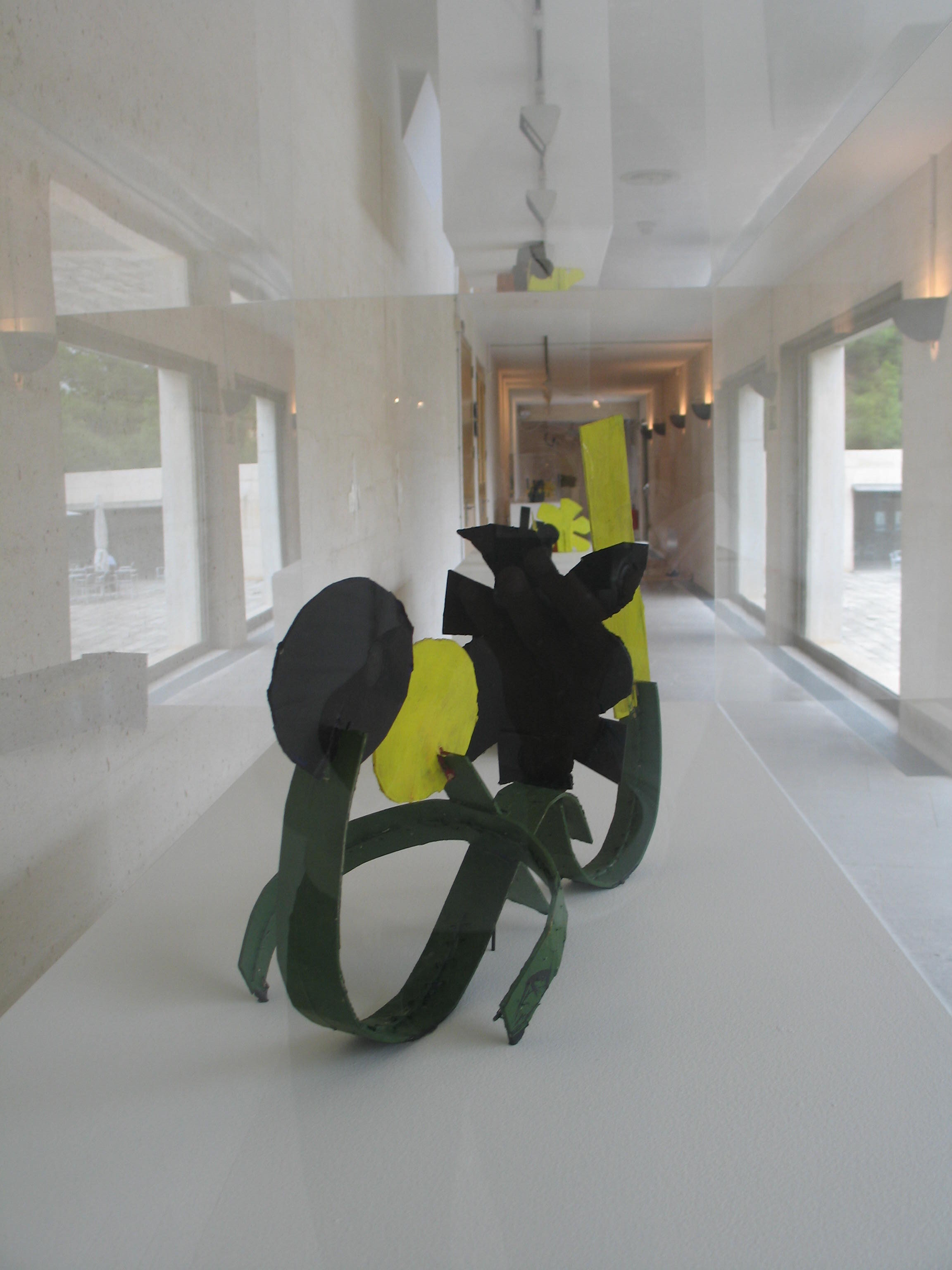
Installation photo of “Adolph Gottlieb: Sculptor” at Fundació Pilar I Joan Miró, Palma, September 2006. Maquette: Arabesque (1968)

Installation photo of “Adolph Gottlieb: Sculptor” at Fundació Pilar I Joan Miró,
Palma, September 2006. Maquette: Arabesque (1968)

 
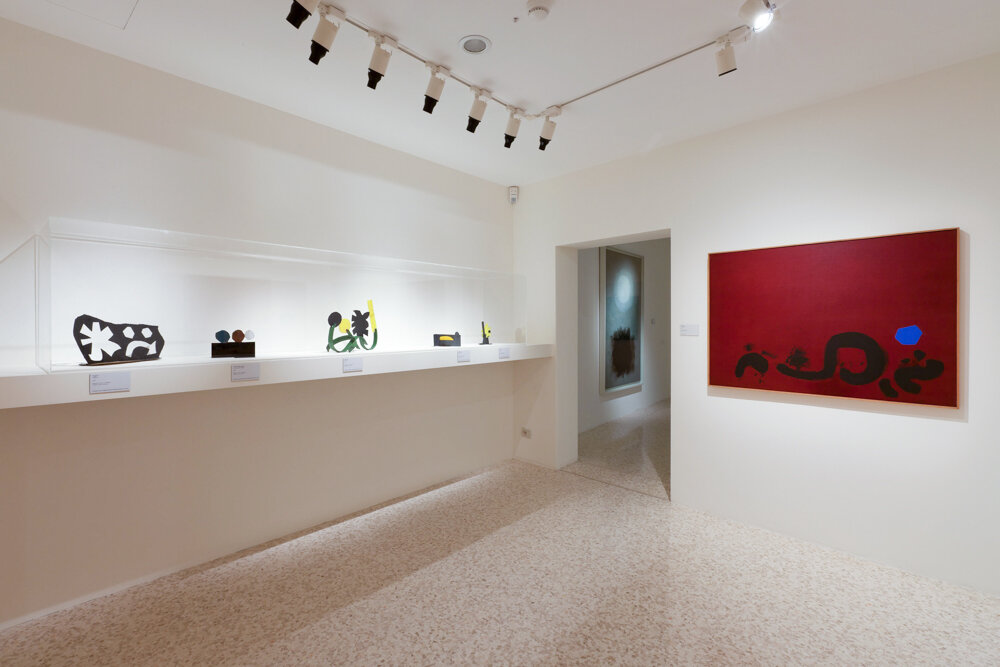
Installation photo of “Adolph Gottlieb: A Retrospective” at the Peggy Guggenheim Collection, Venice, September 2010. Maquettes (left to right): Negative, Untitled (Three Discs), Arabesque, Oval Slanted, Petaloid (all 1968), Paintings (left to right): Mist (1961), and Indian Red (1972).

Installation photo of “Adolph Gottlieb: A Retrospective” at the Peggy Guggenheim Collection, Venice, September 2010.
Maquettes (left to right): Negative, Untitled (Three Discs), Arabesque, Oval Slanted, Petaloid (all 1968),
Paintings (left to right): Mist (1961), and Indian Red (1972).

Installation photo of “Adolph Gottlieb: Sculptor” at the Akron Art Museum, October 2012. Paintings (left to right): Three Elements (1964), Three Discs on Chrome Ground (1969) Sculptures (left to right): Two Arcs, Two Arcs (maquette) (both 1968), Petaloid with Curved Arrow (maquette), and Petaloid with Curved Arrow (both 1968).

Installation photo of “Adolph Gottlieb: Sculptor” at the Akron Art Museum, October 2012.
Paintings (left to right): Three Elements (1964), Three Discs on Chrome Ground (1969)
Sculptures (left to right): Two Arcs, Two Arcs (maquette) (both 1968), Petaloid with Curved Arrow (maquette), and Petaloid with Curved Arrow (both 1968).

All artworks ©Adolph and Esther Gottlieb Foundation/Licensed by ARS, NY, NY
To see more works by Adolph Gottlieb, click here.


A Look Back: The Gottliebs in Arizona


In the fall of 1937, after Esther Gottlieb is advised by her doctor to move to drier climates, the Gottliebs move from Brooklyn, New York to Tucson, Arizona.


Above: a map indicating the location of the Gottlieb's Tuscon home. In a November 1937 letter to Paul Bodin, Adolph describes the house as "a nice little house on the outskirts of town, lots of space around it and a magnificent view of the Santa Catalina mountains."


In a 1975 Interview with Stephen Pearson, Esther Gottlieb discussed the Gottliebs' life in Tuscon:

"We went to Arizona from Brooklyn and Adolph was working on the WPA project. In the late Thirties I hadn’t been well, and the doctor said Tucson would be the place to go. Adolph was on the project at the time, and it was suggested that perhaps he should try to get a transfer to Arizona. However, he was unsuccessful in doing so, but we decided to go anyway. We put our furniture in storage and went to Tucson in 1937. I took sick leave from teaching, and with what money we had, we left New York.
It was very congenial to be there as far as work was concerned. When it came time to size canvas (the house was very small and there was no place to put it) he decided to wrap the house with the canvas. We started at our one door and worked our way completely around the house until we reached the door again. Then we proceeded around the house and drove nails, and then we laced the two edges of the canvas strip with rope and stretched it between the rows of nails.
People must have thought we were crazy. So, we wrapped the house and sized the canvas. When it was finished, we took it down and rolled it up. He had many pads of water color paper. He’d use one side, and if he didn’t like it, he’d use the other side. At that point, I would nail all these pieces of used paper on the outside of the pump house and size them. I would paint on those pieces of paper that Adolph had already painted on both sides, so we didn’t waste any.
We’d get up early and work, and usually towards nightfall we’d go for a walk. Later on, it was too hot to stay in the house, so we’d get up early and do our work, whatever we had to do in the morning, then we would sit on deck chairs in the shade of the house and have the hose handy to wet ourselves down. Before it got that hot, we used to stand at our easels, painting in separate rooms. When Adolph or I got hot, we would get under the shower, get soaking wet, and walk back to our easels. The dog would follow. He’d be the third one. Then he’d lie in the tub where it was cool.
"


above: Esther at Easel, 1937, pencil on paper, 10 7/8 x 8 1/2"


During this period of time, Adolph Gottlieb began to experiment with painting techniques that eventually influenced the work he made when the Gottliebs returned to New York, a year later. He speaks about this experimentation in a 1967 interview with Dorothy Seckler.

ADOLPH GOTTLIEB: We went out there and lived in the desert for about nine months. It was very beneficial for my wife's arthritis and practically cleared it up. I produced a great deal of work during this period I was away from the New York scene and started using the material that was at hand. I didn't have any money. Art supplies were expensive. I started using paint from cans that I got from paint stores. I painted the objects that I picked up from the desert, dry pieces of cactus and other things, pieces of bone.

Everybody seemed to think that my colors were influenced by the desert because I use tans and browns and grays and soft colors. That may be. It's possible. It may be also that I just limited myself to that sort of a palette. Well, then I came back to New York and had a show of that work. A lot of people seemed to think I had become very abstract. It didn't strike me as being particularly abstract.

DOROTHY SECKLER: What made them feel it was more abstract? Was there a reduction of means?

ADOLPH GOTTLIEB: Yes. I simplified my space very much. And it was at that point that I became very much aware of certain special problems. It was necessary for me to have a certain kind of space for the kind of forms I wanted to use. That I think made it seem rather abstract. Oh, I was dealing with an abstract problem in that sense. It was all very tangible and specific to me as I worked but it had a look of what people call abstract.

Adolph corresponded often with Paul Bodin, with whom he discussed life in New York and the direction his art was heading as he explored in Arizona.


"Dear Paul-

Thanks again. I do hope now you will act upon my sincere request that you do the carting of my pictures in a taxicab. What if it does run into a couple of dollars thru the year? Believe me I would consider it well spent and worth while and mainly, would not feel so badly about your dragging my pictures about. I will now do what I should have done before leaving, send you some money to hold for possible expenditures such as taxi cabs. Will send a money order in a separate envelope in a day or so when I get to the P.O. in town.
Glad to get your report on Solman’s and Rothkowitz’s paintings. I get very little news about the “Ten” especially regarding painting. Anyway glad that some good work is being done. Presume that Solman is continuing his street themes. Is he? Is he more abstract? It’s a bit hard to visualize Rothkowitz being more organized. Well he certainly needed that.
How about your own things? Are you working?
Have dropped still life completely. Am oscillating between landscape and carnival things. I think I’ve gotten the hang of landscape at last. I mean a way of approaching the subject. Never thought I was cut out to be a landscape painter, but maybe I’ll be one yet.
The enclosed letter is one I sent you, that came back to me because I forgot to put the street number on the address.

Fondly, Adolph"

In 1999, an exhibition titled "Adolph Gottlieb and the West" opened at the Tucson Museum of Art before traveling to the El Paso Museum of Art and the Yellowstone Art Museum (in Billings, Montana). Below is a selection of drawings and paintings that were part of that exhibition.

Left: Untitled (Esther at Easel), c. 1937, oil on canvas, 40 x 36 1/8”
Right: Untitled (Circus Girl), c. 1938, oil on canvas, 23 3/4 x 29 7/8”


Left: Untitled, c. 1938, collage, gouache and pencil on paper, 4 3/8 x 5 7/8”
Right: Still Life with Chessboard, 1937, oil on canvas mounted on pasteboard, 16 x 23 7/8”


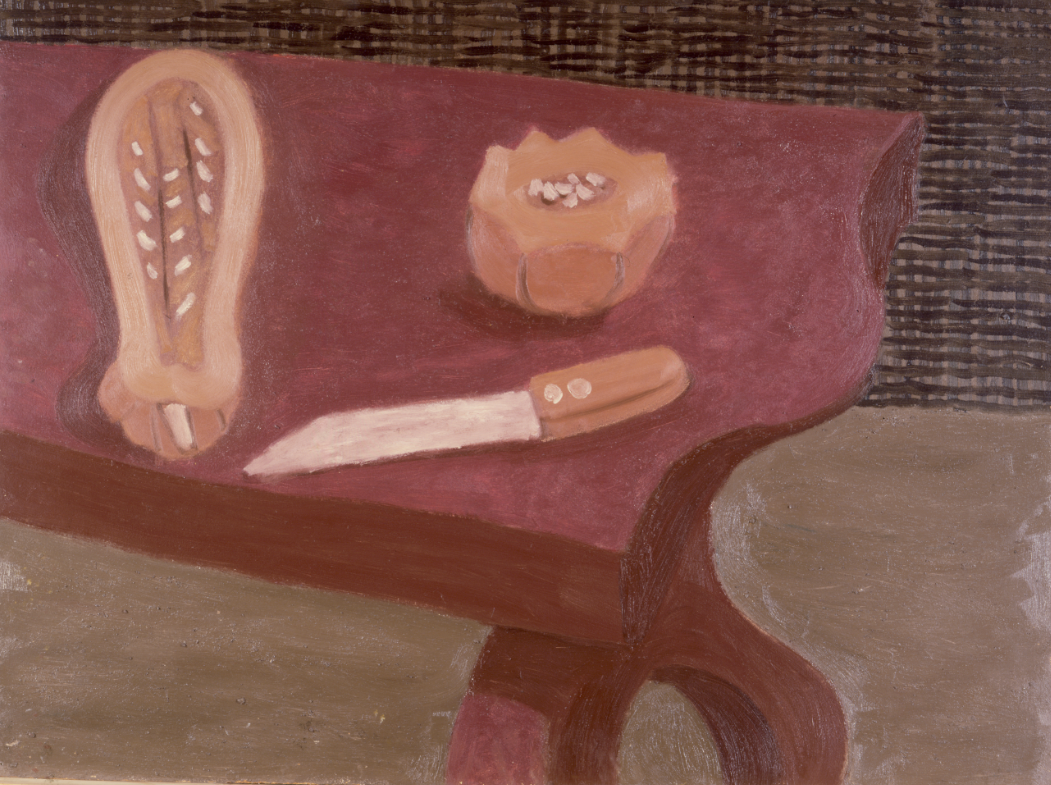
"The Arizona Still Lifes were the major body of work he produced in Tucson. They represent Gottlieb returning to his core interests as a painter, at the same time as he was reaching forward to test his new approach to subject matter. He began working in series long before the notion became a popular method of the 1950s and 1960s. Gottlieb intended his still-life paintings to present a vision of his experience of Tucson. He proposed to accomplish this goal within severely limited visual means. He allowed himself the images of the table, a few randomly placed objects, and, sometimes, a view through the window."

Left: Untitled (Cactus Still Life), c. 1938, oil on canvas, 24 3/4 x 31 3/4”
Right: Symbols and the Desert, 1938, oil on canvas, 39 3/4 x 35 7/8”


Left: Untitled (Gray Still Life - Gourds), c. 1938, oil on canvas, 30 x 40”
Right: Untitled (Pink Still Life - Curtain and Gourds), c. 1938, oil on canvas, 30 x 39 3/4”

"The direction he began to pursue in Tucson allowed Gottlieb to integrate his feelings and thoughts about painting into a coherent direction. Through several false starts, he evolved the beginnings of a method that dealt primarily with the exploration of a contemporary visual language. The paintings he created were the means of that exploration, and the range it encompassed was quite extensive. He was able to touch on themes that became major issues not only in his own art but in that of his colleagues as well.

Gottlieb returned to New York in 1938 to a mixed reception. He no longer felt comfortable with many of his old friends. He had realized that he could not go back to the old habits of showing each new work to his friends and reacting to their comments. He was committed to the idea of forging a new direction for painting. With that in mind, he began to meet regularly with his friend Mark Rothko to discuss issues. The result of those meetings was a major breakthrough in American art. In 1940 and 1941 Rothko began his Mythic paintings and Gottlieb began his Pictographs. Both artists determined that a few issues were paramount, and they listed some beliefs in a famous letter published in the New York Times. Within that short list was the following

We favor the simple expression of complex thought. We are for the large shape because it has the impact of the unequivocal. We wish to reassert the picture plane. We are for flat forms because they destroy illusion and reveal truth. [1]

These were issues Gottlieb initiated in his Tucson paintings."

– Sanford Hirsch, from the catalogue essay for "Adolph Gottlieb and the West"

Left: Untitled (Self Portrait in Mirror), c. 1938, oil on canvas, 39 7/8 x 29 5/8”
Right: Portrait of Esther, 1937, gouache on paper, 11 7/8 x 9”


All artworks ©Adolph and Esther Gottlieb Foundation/Licensed by ARS, NY, NY


An Inside Look: Adolph Gottlieb and John Graham

 
sh+john+graham.jpg
1942_Siskind_Home.jpg

Left: John D. Graham, 1939. John D. Graham papers, 1799-1988. Archives of American Art, Smithsonian Institution.
Right: Adolph Gottlieb in his home/studio in Brooklyn with pieces from his African art collection, 1942. Photographer: Aaron Siskind. © The Aaron Siskind Foundation.

John D Graham, born Ivan Dabrowski in Kiev in either 1881 or 1886, was a painter, theorist, and connoisseur who was an important influence on the Abstract Expressionist generation of American artists. Graham came to New York via Paris in the early 1920s, and enrolled in The Art Students League where he was the monitor for John Sloan’s class. He was active as a painter until his death in 1961, and he authored major articles on Picasso, Tribal Art, and abstraction that were widely read among young American artists in the 1930s. Slightly older than the Abstract Expressionists, Graham knew several European artists personally and was a vital link between many American artists and the ideas and theories of the School of Paris.

In a 1981 interview with Phyllis Tuchman, Esther Gottlieb recalled the story of how Adolph Gottlieb and John Graham met, saying, "In fact, Adolph knew John Graham when he first came to this country and he met him in [John] Sloan’s class. And he wanted to be an American citizen so Adolph went with him down to city hall to get his citizenship papers. And they were great friends. When we moved to Brooklyn Heights John used to come frequently to visit us and we introduced him to David [Smith] and all the people that we knew who were in the area who were artists. And then as time went on he just established himself and he was a great friend of Gorky’s and other people. But he was knowledgeable about primitive art, African art."

unnamed+%281%29.jpg
4101.JPG

Left: John Graham, The White Pipe, 1930, oil on canvas mounted on board, 12 1/4 x 17”, Grey Art Gallery, New York University Art Collection. Gift of Dorothy Paris. 1961.56
Right: Adolph Gottlieb, Untitled (Still Life), 1941, oil on canvas, 25 13/16 x 34”

john Graham mascara.jpg
4404_Amoeba.jpg

Left: John Graham, Mascara, 1950, oil on canvas, 24 x 19 1/2”, Collection: Addison Gallery of American Art, Phillips Academy, Andover, Massachusetts
Right: Adolph Gottlieb, Amoeba, 1944, oil on canvas, 24 x 20"

"Adolph liked John because he was a very erudite man and very sensitive about everything. He was interested in primitive sculpture before anyone else we knew. In fact, he was one of the few Americans who had any background or knowledge of it. He helped Frank Crowninshield make his collection, and later helped Helena Rubenstein. When we went to Europe in ’35, John gave us the names of a few dealers. I believe that their friendship grew because Adolph had been to Europe. It was a friendship that lasted over a long period of time."

– Esther Gottlieb Interview with Stephen Pearson, 1975

Graham _HaveIt_ cover.JPG
Graham _HaveIt_ inscription.JPG

Above: Front cover and title page of Adolph Gottlieb's copy of HAVE IT, by John Graham.
Inscription by John Graham reads, "To Adolph Gottlieb JDG, Feb 20, 1925 NYC"

The friendship between Gottlieb and Graham grew through a commitment to progressive thought and a mutual appreciation of tribal art. Both artists were among a very small number of artists in New York in the early 1920s who had first-hand experience of European Modernism. They shared an interest in abstraction, although they ultimately defined those ideas differently; and each artist developed a unique understanding of the connections between the art of different societies and different eras. Some of the notions Graham presents in his 1937 book System and Dialectics of Art, and Graham’s adaptation of Carl Jung’s ideas about archetypes, appear to have influenced Gottlieb’s thinking as he developed his Pictographs in the 1940s.

Graham__S & D_ cover.JPG
Graham _S&D_ amended.JPG

Above: Adolph Gottlieb's copy of Graham's System and Dialectics of Art, including an inscription from the author.

"A friend of mine, John Graham, had a marvelous collection. He was collecting things for Frank Crowninshield. He helped assemble that collection and also did a lot of things I believe for Helena Rubenstein. So I was associated with people who had an intense interest in this matter and I had the opportunity to see very good pieces and I read whatever I could about it so that I became quite familiar with it."

– Adolph Gottlieb in an interview with Dorothy Seckler, 1967

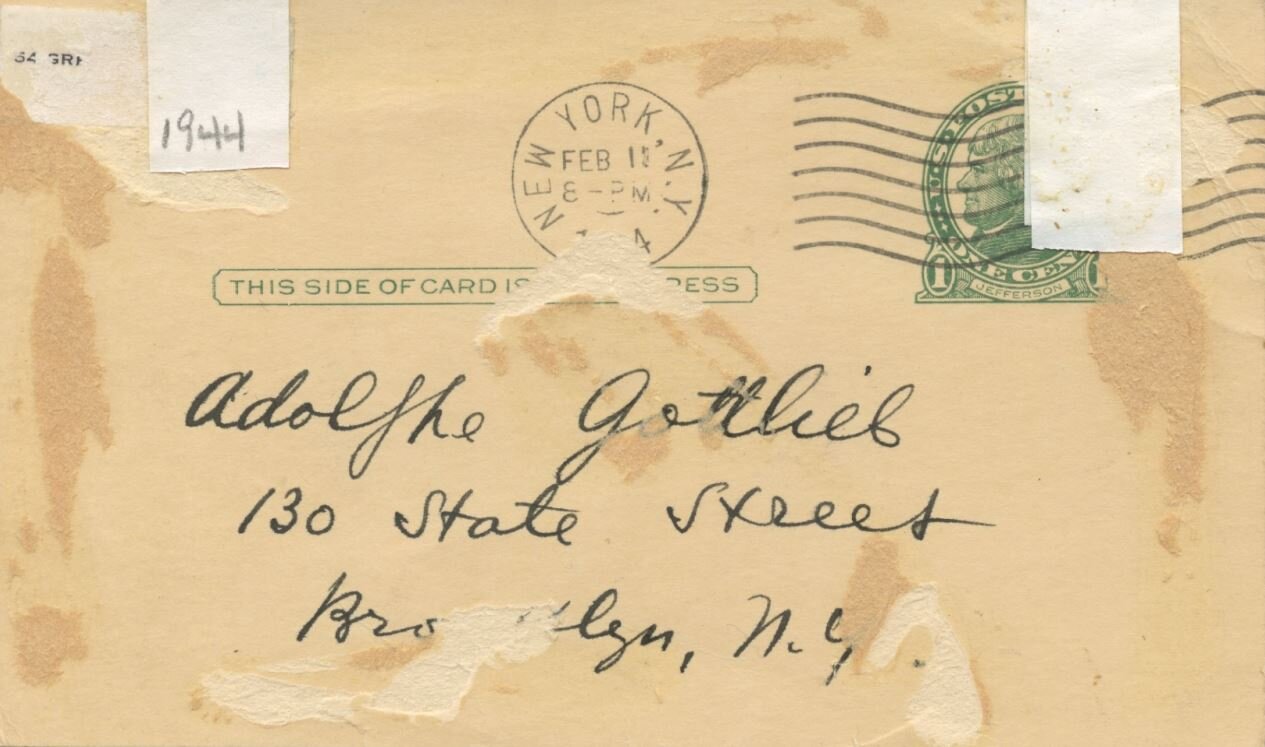
Below: a 1944 postcard from John Graham commenting on Adolph Gottlieb's exhibition at the Wakefield Gallery

 
john graham postcard front.JPG
 
 
john graham postcard back.JPG
 

"Dear Adolph -- you are the one man in art in America who has been continously progressing -- your present show is the best you ever had, I was happy to see it and to feel enthusiastic about it. I would like Amoeba (1944) for myself. Much of everything to you, ever affectionately,

GRAHAM."

 
lionbank.jpg
 

To see more from the archives of the Adolph and Esther Gottlieb Foundation,
click here.
©Adolph and Esther Gottlieb Foundation/Licensed by ARS, NY, NY⠀


Foundation News: Supporting Brooklyn Food Banks

 
H 1930s_A,E,+Mickey_BrooklynPier_02.JPG

The Gottlieb Foundation is proud to announce a donation of $5000 each to Brooklyn-based food banks RCS Programs and CHiPS. Adolph and Esther Gottlieb had long ties to the community in Brooklyn; in fact, they lived, and Adolph worked, in their apartments on State Street for the first half of Adolph's career (1933 - 1956). The Gottlieb’s home and studio were a center for many of the avant-garde artists and events of those years. While several colleagues encouraged Adolph to move to Manhattan to be closer to the galleries, he preferred staying in his community and moved only when his mother became ill and needed assistance.

We are pleased to follow their tradition of participating in the Brooklyn community that meant so much to the Gottliebs. Please read below to learn more about these generous organizations.


logo new full.png
 

RCS-Reaching Out Community Services @rcsprograms leads the effort to eliminate hunger in our community and provide social services and programs that inspire self-reliance and community empowerment in a dignified manner. They can be found online at rcsprograms.org

 
Chips master logo - no address.png
 

Community Help in Park Slope, Inc (CHiPS Soup Kitchen & Women's Shelter) is a soup kitchen and shelter for homeless pregnant women and infants, serving Brooklyn since 1971. CHiPS has remained open throughout the pandemic, providing safe shelter for moms and babies and serving hundreds of meals per day through the new Pop-Up takeaway meal program. You can learn more about CHiPS's work by following them on Facebook, Instagram, or Twitter @chips4thave, or by visiting chipsonline.org.


From the Archive: Gottlieb's Materials

 
Adolph Gottlieb in Provincetown, 1952. Photographer: Maurice Berezov.

Adolph Gottlieb in Provincetown, 1952. Photographer: Maurice Berezov.

Adolph Gottlieb in his studio, 1960. Photogapher: Guy Weill

Adolph Gottlieb in his studio, 1960. Photogapher: Guy Weill

"The painter Joseph Solman once told me that he and Adolph Gottlieb were at a Picasso show in the 1930s when Adolph suddenly said, 'I get it--it's physical.'
Gottlieb recognized painting was language and that language shapes meaning through the studied use of details. In the art of painting, materials are a large part of detail so the precise meaning an artist intends relies on the artists' materials as much as anything else."

– Sanford Hirsch, Executive Director of the Gottlieb Foundation

 
Adolph Gottlieb in his studio painting Ascent (1958), 1958. Photographer: Rudolph Burckhardt.

Adolph Gottlieb in his studio painting Ascent (1958), 1958. Photographer: Rudolph Burckhardt.


In a 1965 interview with Gladys Kashdin, Gottlieb once said, "Well, I've tried every possible thing -- sure I've used rollers, I've used squeegees, I've used rags and knives and sticks -- I think that in order to express what you want to express you have to find your own way of doing it, the right materials and tools and so on You don't have to, but it's preferable, to find something that fits what you are trying to express."

Adolph Gottlieb at his Bowery Studio with paints and brushes, 1968. Photographer: Michael Fredericks.

Adolph Gottlieb at his Bowery Studio with paints and brushes, 1968. Photographer: Michael Fredericks.

Adolph Gottlieb began using commercial house paints and other nontraditional materials when he and Esther lived in Tucson, Arizona in 1938. In a 1967 Interview with Dorothy Seckler, Gottlieb said of working in Arizona, " I produced a great deal of work during this period I was away from the New York scene and started using the material that was at hand. I didn't have any money. Art supplies were expensive. I started using paint from cans that I got from paint stores. I painted the objects that I picked up from the desert, dry pieces of cactus and other things, pieces of bone."

 
Untitled (Arizona Still Life), 1938, oil on pressed board, 36 x 47 15/16 “

Untitled (Arizona Still Life), 1938, oil on pressed board, 36 x 47 15/16 “


One important aspect of Gottlieb's Pictographs, painted between 1941 and 1954, is the artist's use of various materials in order to obtain very specific surface and density effects. In these paintings, Gottlieb used oil paints, gouache, casein, enamels and other materials like smalts and cotton waste to paint discrete areas in order to amplify the emotional impact of each painting.

Alkahest Of Paracelsus, 1945, oil and egg tempera on linen, 60 x 44 ". Currently in the collection of the Museum of Fine Arts, Boston

Alkahest Of Paracelsus, 1945, oil and egg tempera on linen, 60 x 44 ". Currently in the collection of the Museum of Fine Arts, Boston

The Token, 1945, oil, tempera & casein on canvas, 31 7/8 x 24 7/8 " Currently in the collection of the Cantor Center at Stanford University.

The Token, 1945, oil, tempera & casein on canvas, 31 7/8 x 24 7/8 " Currently in the collection of the Cantor Center at Stanford University.

Gottlieb continued to use commercial paints and other manufactured materials along with traditional artist materials throughout his career. His objective was to obtain precise optical and sensual effects to give added emotional meaning to his art.

Labyrinth #3, 1954, oil and enamel on canvas, 80 x 185”. Currently in the collection of Institut Valencià d'Art Modern, Spain.

Labyrinth #3, 1954, oil and enamel on canvas, 80 x 185”. Currently in the collection of Institut Valencià d'Art Modern, Spain.

Adolph Gottlieb at his Bowery Studio with materials, 1968. Photographer: Michael Fredericks.

Adolph Gottlieb at his Bowery Studio with materials, 1968. Photographer: Michael Fredericks.

Adolph and Esther Gottlieb in the East Hampton studio with Roman III #3 and Burst 1973 (both 1973), summer 1973.

Adolph and Esther Gottlieb in the East Hampton studio with Roman III #3 and Burst 1973 (both 1973), summer 1973.

"I think that the important thing about this accidental effect and the use of the accident is that, for one thing, it allows a certain spontaneity, and it gets away from the tradition of brush and a buttery kind of paint application. You have to remember that the tools and materials that we've inherited were highly perfected over the last few hundred years, mainly for the purpose of painting portraits or landscapes; and if you want to do some other kind of painting, you have to find other tools, perhaps, or other material; or change the nature of the material so that it's suitable to what we want to express, rather than the painting of portraits."

– Adolph Gottlieb in an interview with Martin Friedman, August 1962

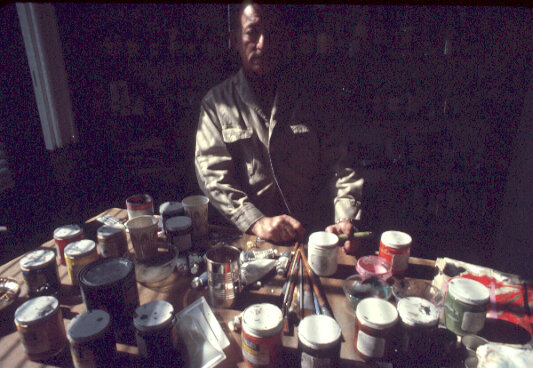
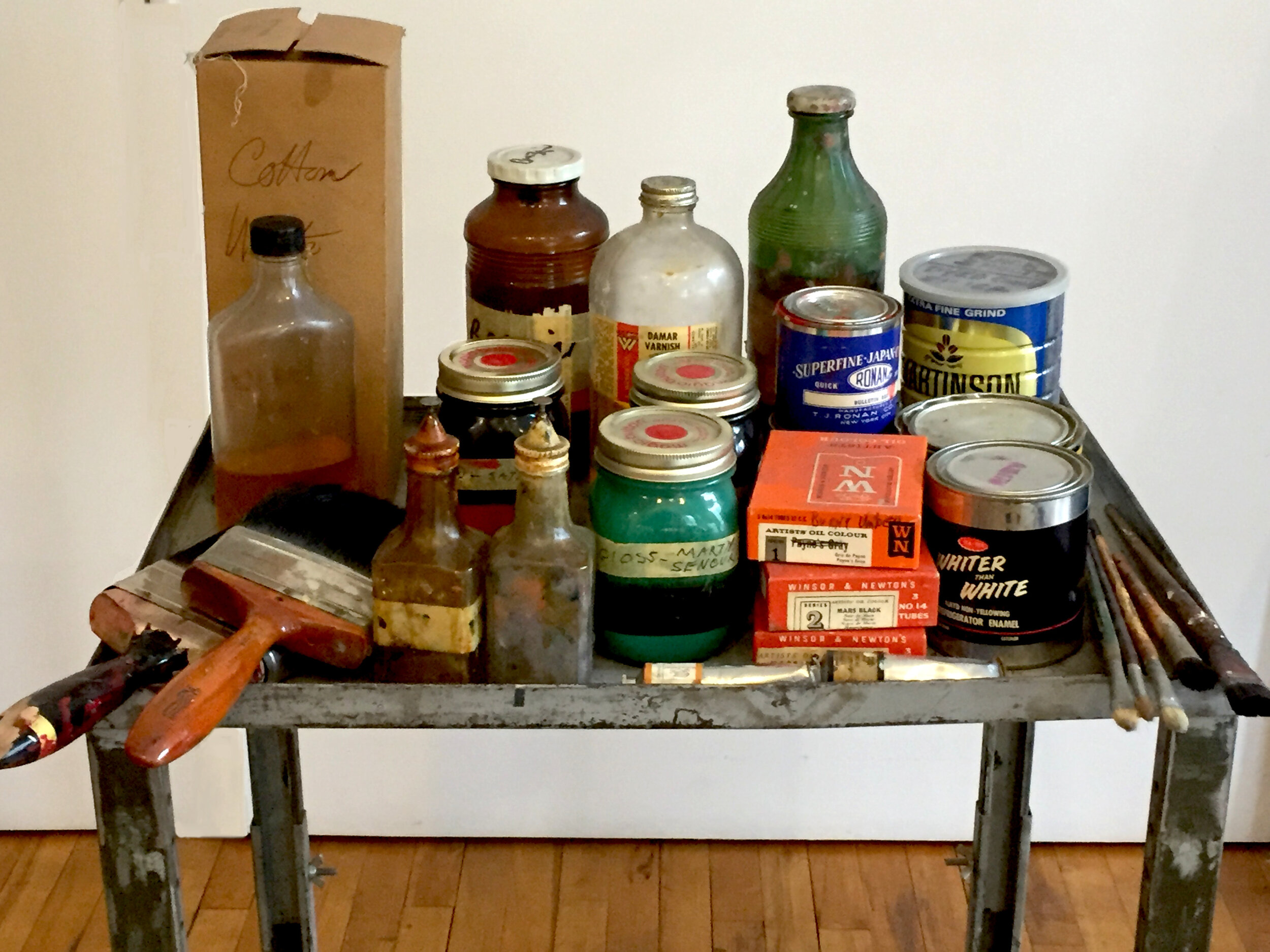
Adolph Gottlieb's painting materials from his studio.

Adolph Gottlieb's painting materials from his studio.

All Artworks ©Adolph and Esther Gottlieb Foundation/Licensed by ARS, NY, NY
To see more artwork by Adolph Gottlieb, visit our website.


An Inside Look: Adolph Gottlieb and David Smith


Adolph Gottlieb and sculptor David Smith became fast friends in 1933, and remained friends through Smith's death in 1965.

In an interview in 1975, Esther Gottlieb describes Gottlieb and Smith's early relationship

"...We were living in Brooklyn Heights and no amount of conversation or suggestions on the part of anybody else made any difference.  David Smith was living on the next block.  I can’t remember where he met David, but they were very good friends, and in those days David was a painter.  There was a very close relationship between all the artists who lived in the area during the WPA days, because all these men were on what’s called the Easel Project.  They were allowed to paint at home, but they had to sign in everyday.  Someone suggested as an alternative that one artist’s studio be designated as headquarters so the men could walk to sign in and not have to spend the time and money to go to the center.  Adolph’s studio became the headquarters.  I don’t know why his studio—it just happened.

We lived on State Street around 1935.  State Street goes straight down to the river, and one block over was Atlantic Avenue, which goes down to the shipyards.  At that time, down near the waterfront, there was an iron works in connection with the ship-building.  Adolph and David would stand at the door and watch them working.  David would reminisce about how he was a sheet metal worker, way back.  One day they were talking about painting and sculpture and David had some great ideas for sculpture, if he only had facilities for doing them.  'What’s the matter with the Terminal Iron Works,' says he one day as they were walking along.  So they stopped in.  He told the man that he was a painter and worked in the neighborhood, and he had experience and knew how to acetylene torches, and that he wanted to do a little work.  So the man said okay.  David went around picking up stuff – all types of metal one could find.  With the scrap metal from the yard, David made his first sculpture."

– An Interview with Esther Gottlieb by Stephen Pearson, 1975

Gottlieb and Smith lost touch briefly in the 1940s when Smith moved away from New York City, but they reconnected later in the decade when Smith began making regular trips to New York. One of the ways in which they maintained their friendship was through regular correspondence.

A 1956 letter from Smith to Gottlieb, discussing the death of Jackson Pollock and Smith's frustration with the art world at the time.

"I'm not feuding with Whitney--I'm dropping them...The hell with them and any other person or institution which doesn't value my work as I do. With a family to support and sculpture to make I shouldn't have this attitude, but I suppose its my death defying acts like Jacks [Jackson Pollock]. I seem to be getting more this way--I want equal rights and I don't want museum people or the like to tell me what art is. I want art to be what I make--or not to hear from them."

– David Smith


A letter from Smith to Gottlieb, December 25, 1957


"Dear Adolph
This is a fan letter. Your show at the Museum was great. It was excellently chosen and some of the 1957 works I had not seen, even better. I hope you get some great sales from it. Anyhow for me it was wonderful to see so many over the period.

Seasons Greetings to you and Esther,
David
"

a letter from Gottlieb to Smith, December 30th, 1957

"Dear David:
Many thanks for your very nice note. It seems that we have a mutual admiration society, which is a most unusual thing for old friends, and I am very pleased with that...
"

Gottlieb Foundation Executive Director, Sanford Hirsch, describes a "sympathy between the two in how they approached material, color, and form." Close relationships can be seen in the paintings and sculpture that Smith and Gottlieb created over the course of their careers.

Adolph Gottlieb, The Sea Chest, 1942, oil on canvas, 26 1/16 x 34 3/16". Currently in the collection of the Guggenheim Museum, New York

David Smith, Home of the Welder, 1945, steel, 533 × 438 × 356 mm. Currently in the collection of the Tate, London

Historian and art critic Karen Wilkin pointed out some similarities between Smith’s The Letter of 1950 and Gottlieb’s Pictographs of the same period.

Adolph Gottlieb, Letter to a Friend, 1948, Oil, tempera, and gouache on canvas, 47 7/8 x 36 1/4"

David Smith, The Letter, c. 1950, 37 5/8 x 22 7/8 x 9 1/4”. Photograph by David Smith

Later works by both artists continue to display many parallels.

Adolph Gottlieb, Spray, 1959, oil on canvas, 90 1/4 x 72 3/8“. Currently in the collection of the Hirshhorn Museum and Sculpture Garden, Smithsonian Institution, Washington, DC

David Smith. 7 Hours. 1961. Steel, paint, 84 1/2 x 48 x 18” (214.6 x 121.9 x 45.7 cm). Collection Onnasch, Berlin. Photo: Robert McKeever

All Artworks by Adolph Gottlieb ©Adolph and Esther Gottlieb Foundation/Licensed by ARS, NY, NY
All Artworks by David Smith © 2020 The Estate of David Smith / Licensed by VAGA at Artists Rights Society (ARS), NY.

To see more works by Adolph Gottlieb, click here.
To learn more about David Smith, visit the website of the David Smith Estate.


From the Archive: A Family Album

The Adolph and Esther Gottlieb Foundation would like to wish you a happy holiday season. Please enjoy the following photographs of the Gottlieb family.

 
Adolph and Esther Gottlieb with their dog Mickey at the Brooklyn waterfront, early 1930s.

Adolph and Esther Gottlieb with their dog Mickey at the Brooklyn waterfront, early 1930s.


Adolph Gottlieb (far right), his mother (second from the right). June 15, 1922. Photographer: Schloss Atelier, Berlin.

Adolph Gottlieb (far right), his mother (second from the right). June 15, 1922. Photographer: Schloss Atelier, Berlin.

 
Adolph Gottlieb with family and friends (Adolph Gottlieb far right).

Adolph Gottlieb with family and friends (Adolph Gottlieb far right).

Adolph Gottlieb with family and friend (Adolph Gottlieb 2nd right).

Adolph Gottlieb with family and friend (Adolph Gottlieb 2nd right).

 
Adolph Gottlieb (seated far left) with Emil, Rhoda, Elsie and Edna Gottlieb in their New York apartment. October 1930.

Adolph Gottlieb (seated far left) with Emil, Rhoda, Elsie and Edna Gottlieb in their New York apartment. October 1930.

To see more photos of Adolph Gottlieb, click here.